
The short answer
Snaking is right for a discrete blockage — a hair mass, a toy, a wad of paper. Hydro jetting is right when the pipe wall itself is coated with grease or scale. The deciding question is simple: if a drain has been cleared more than once in a year, cabling is treating the symptom.
There are two ways to clear a drain, and companies tend to sell whichever one they own equipment for. Here is the honest version, including the situations where the more expensive option is the wrong choice.
What cabling actually does
A drain cable — a snake, a rooter, a drum machine — pushes a flexible steel cable down the line with a cutting or retrieval head on the end. It punches through the obstruction, breaks it up, and restores flow.
It is fast, inexpensive, and exactly right when the problem is a discrete object: a hair mass in a shower trap, a toy in a toilet, a wad of paper in a branch line, or a root ball at a joint that needs cutting.
What it does not do is clean the pipe. A cable makes a hole through the blockage. If the pipe wall is coated with grease, soap scale or sludge, that coating stays exactly where it was — and it catches the next thing that comes down.
What hydro jetting does
A jetter pushes water through a specialized nozzle at high pressure. Rear-facing jets propel the hose up the line while forward jets cut the obstruction. The scouring action strips grease, scale and sludge off the pipe wall as the hose is drawn back out.
Done correctly, the line returns to something close to its original inside diameter instead of a channel through the middle of the debris. That is the whole difference, and it is why jetting holds for years where cabling holds for months.
How to tell which you need
The single most useful question: how many times has this drain been cleared?
- First time, single fixture, obvious cause — cable it. This is a discrete blockage and jetting would be overkill.
- Kitchen line that clogs every few months — jet it. That pattern is grease coating the pipe wall, and cabling will keep punching through the same buildup indefinitely.
- Main line with root intrusion — cable to cut, then decide. Cutting restores flow immediately. Whether you then line the pipe to stop the roots returning is the real conversation.
- Old cast iron that has gotten progressively slower over years — camera first, then likely jet. Cast iron scales inward, and cabling cannot remove scale.
- Commercial kitchen line — jet on a schedule. Grease loading in a food service operation is continuous, and scheduled jetting is far cheaper than a mid-service backup.
When jetting is the wrong tool
This is the part most articles skip, and it matters.
High-pressure water in a pipe that is already cracked, badly deteriorated, or structurally compromised can make things dramatically worse. Old cast iron that has corroded through at the bottom, clay pipe with offset joints, and Orangeburg pipe that has already deformed are all situations where jetting can turn a restriction into a collapse.
This is why we camera aging lines before jetting them. If the pipe cannot take it, the honest answer is to say so and talk about repair instead — which we do, even though the jetting job would have been the easier sale.
Why the camera matters either way
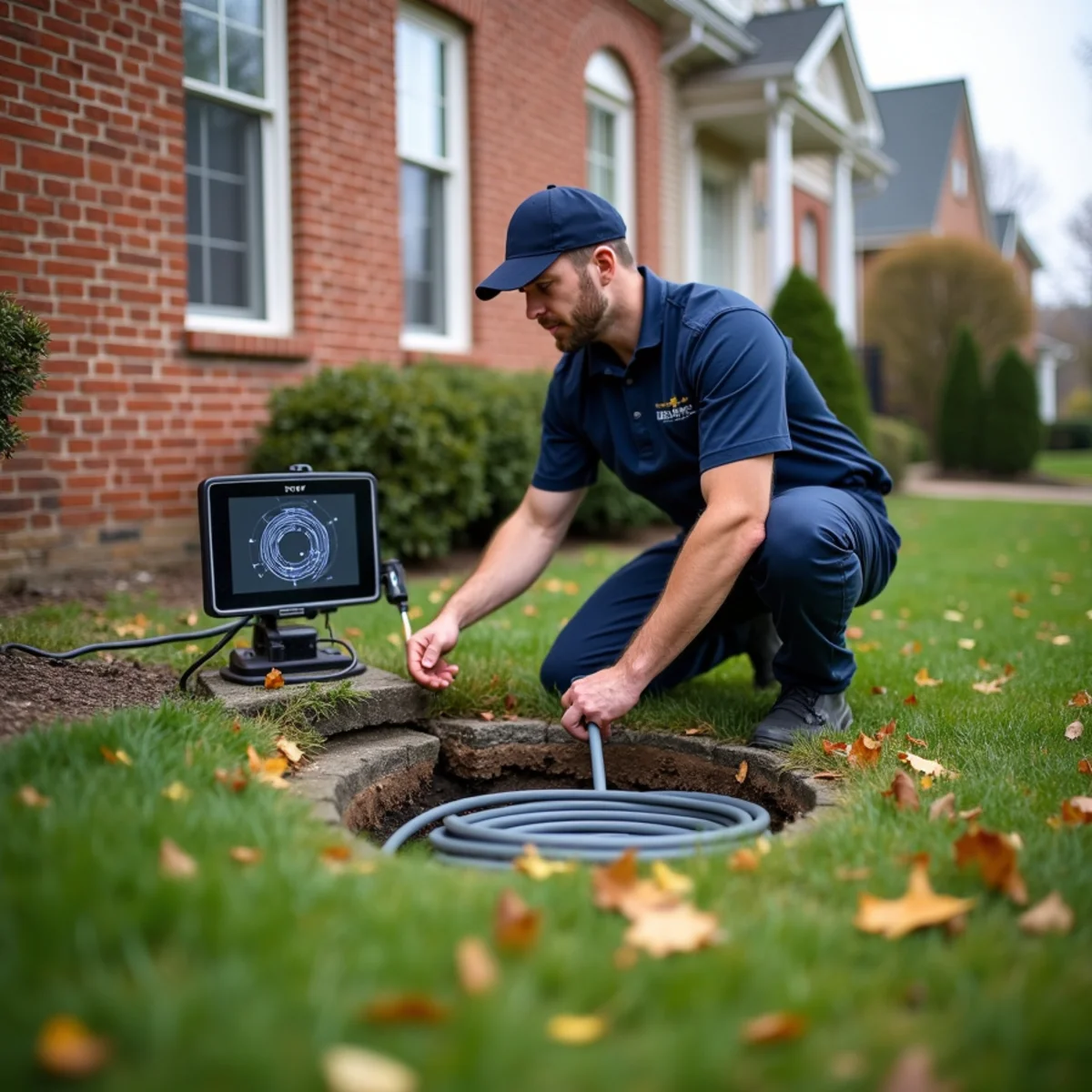
On main lines and repeat clogs, we run a camera after clearing and you watch it with us. There is a version of this trade where a plumber clears a line, announces the sewer is failing, and quotes a replacement — and the homeowner has no way to verify any of it.
Seeing the actual pipe removes that problem entirely. If it is roots, you see roots. If there is a belly holding water, you see the camera swimming through it. If the line is in good shape and the clog was a one-time event, you see that too, and we tell you it needs nothing else.
The Fredericksburg pattern
Local drain problems cluster into three types depending on where you are.
In older neighborhoods — Downtown, Falmouth, the mid-century streets — the issues are scaled cast iron stacks and root intrusion into clay laterals under mature trees. Both are chronic rather than acute, and both respond to the right tool rather than repetition of the wrong one.
In newer subdivisions through Spotsylvania and Stafford, the pipe material is fine and the problems are installation-related — a section that settled after construction and now holds standing water where solids collect. Jetting manages small bellies; significant ones need excavation and re-bedding.
And everywhere, kitchen grease. It is the most common single cause of the drain calls we run in homes of every age.
What you can do yourself
A hand auger from the hardware store handles most single-fixture clogs and costs about the same as one bottle of chemical drain cleaner. Use it instead.
Please do not pour chemical drain cleaner into an older cast iron or galvanized line. Those products work by generating heat and caustic reaction, and they accelerate corrosion at exactly the spot they sit — the blockage. We have replaced pipe sections that were structurally fine until somebody poured three bottles down them over a winter. They also make the line hazardous for whoever opens it afterward.
Prevention, honestly
Scrape plates into the trash rather than the disposal, and pour cooking grease into a can. Put a hair catcher in every shower. Flush toilet paper only — wipes marked flushable do not break down and are the single biggest avoidable cause of the main line clogs we clear. If you have a known root problem, get on a maintenance interval so the line is cleared on your schedule rather than the roots'.
Related services and areas
If this article describes what you're dealing with, these are the pages that cover the fix.
Frequently Asked Questions
Count the clearings. If a drain has been cleared more than once in a year, cabling is treating the symptom — there is buildup on the pipe wall that a cable only tunnels through. Kitchen lines with grease and old cast iron with scale are the classic jetting candidates.
It can, in pipe that is already compromised — badly corroded cast iron, clay with offset joints, or deformed Orangeburg. That is why aging lines should be camera inspected before jetting. If a contractor wants to jet an old line without looking at it first, ask why.
We would rather you did not, especially in an older home. They rarely resolve a real blockage, they accelerate corrosion in cast iron and galvanized pipe at exactly the point they sit, and they make the line hazardous for whoever opens it next. A hand auger costs about the same and actually works.
Most homes never need it on a schedule. Homes with mature trees over the lateral often benefit from a root cut every one to two years. Commercial kitchens should be on a regular interval based on volume. We will tell you after a camera inspection whether yours falls into a maintenance category or not.
Want it handled?
Talk to a Licensed Fredericksburg Plumber
Written, itemized estimate before we start. We'll also tell you honestly when the answer is that you don't need us yet.
- 4.8 stars · 26 reviews
- Licensed & insured
- 24/7 emergency service