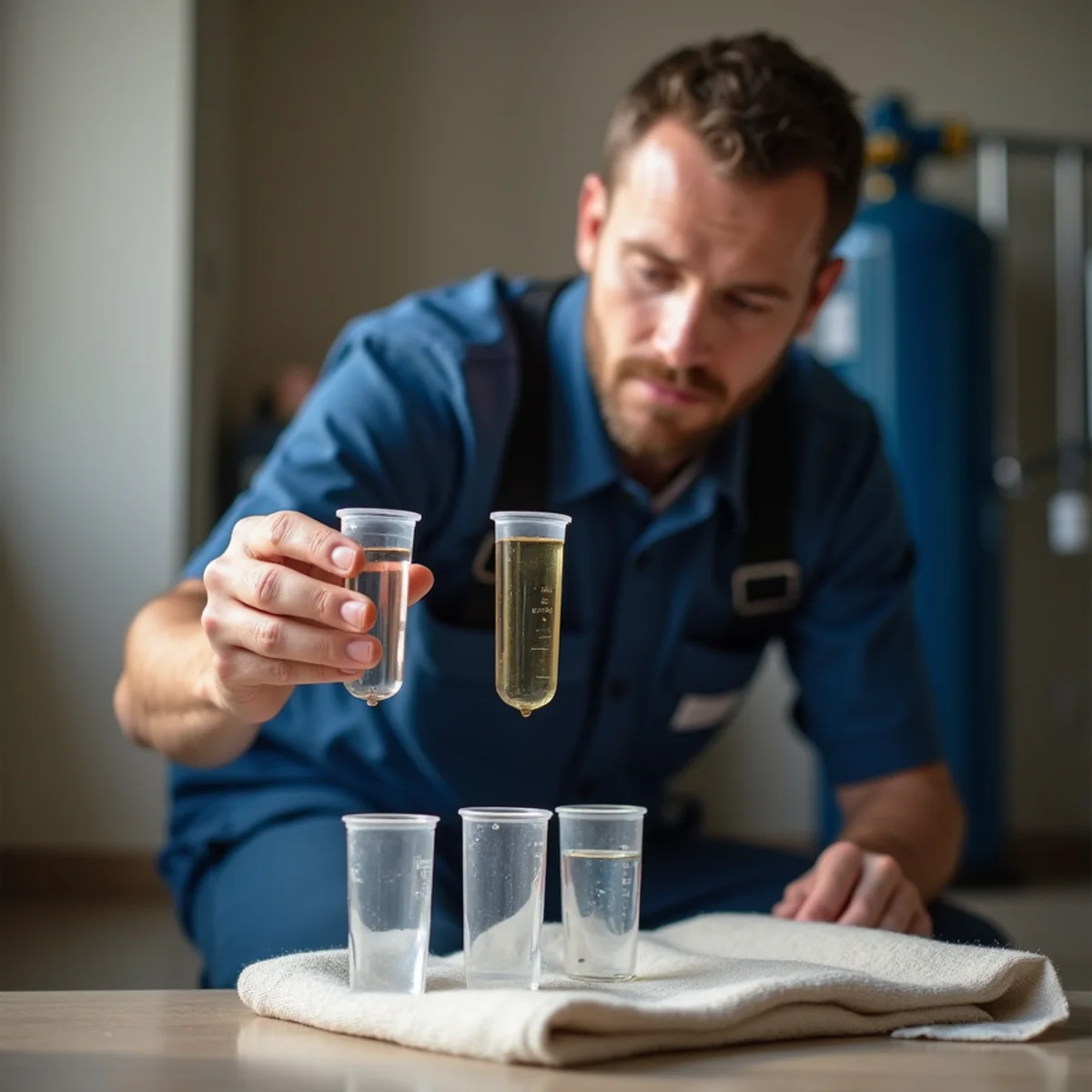
Water treatment in Fredericksburg, VA should start with a test, not a sales visit. We measure hardness, iron, pH and — on wells — bacteria and nitrates, then recommend only the equipment those numbers justify. Frequently the honest answer is a filter cartridge rather than a system.
Water treatment is the corner of plumbing with the most aggressive marketing and the least homeowner information. People get talked into eight-thousand-dollar systems for a problem a two-hundred-dollar filter would solve, and other people live with genuinely hard water for a decade because they assume treatment is a luxury.
The fix for both is the same: test the water, then decide.
What is actually in Fredericksburg-area water
Homes in this region draw from two very different sources, and they have different problems.
Municipal supply
City of Fredericksburg and county utility customers get treated, tested, regulated water that is safe to drink. What treated water still carries is dissolved mineral content — hardness — and residual disinfectant. Neither is a health concern. Both are noticeable in daily life: scale on fixtures, spots on glasses, soap that will not lather, and a chlorine taste some people find unpleasant.
Hardness levels vary by the specific system and by season. This is why we test at your tap rather than quoting a regional average.
Private wells
Substantial parts of Spotsylvania, Caroline, King George and rural Stafford are on wells, and well water is unregulated — nobody is testing it but you. Around here the common findings are iron (orange staining on fixtures and laundry), hydrogen sulfide (the rotten-egg smell), sediment from the aquifer or a failing well screen, low pH that is aggressive to copper pipe, and occasionally bacteria.
If you are on a well, annual testing for bacteria and nitrates is genuinely important, particularly with young children or anyone pregnant in the house.
What hard water is really costing you
Hardness is dissolved calcium and magnesium, measured in grains per gallon. It is not a safety issue. It is an expense issue, and it is a bigger one than most people realize.
- Water heaters. Scale builds on the tank bottom, insulating the burner from the water and forcing longer run times. It also shortens tank life, sometimes by years.
- Tankless units. The narrow heat exchanger passages are far more sensitive to scale than a tank is. Without treatment or diligent annual descaling, output drops and error codes start.
- Dishwashers and washing machines. Scale accumulates on heating elements and in valves. Appliance lifespan drops measurably.
- Fixtures. Shower heads clog, faucet cartridges wear faster, and the aerators need cleaning constantly.
- Soap and detergent. You genuinely use more of everything, because the minerals bind with the surfactants before they can do their job.
The equipment, and what each thing actually does
Sediment filter
A cartridge that catches sand, silt and rust particles at the point where water enters the house. Inexpensive, easy to service, and the right first stage on almost any well system. It does nothing for hardness or taste — it is a mechanical strainer.
Ion-exchange water softener
The only thing that actually removes hardness. Water passes through a resin bed that swaps calcium and magnesium ions for sodium, and periodically the bed regenerates itself using brine from a salt tank. It genuinely works, it has worked for decades, and it is the correct answer for hardness.
The trade-offs are honest ones: you refill salt every month or two, it uses some water during regeneration, and it adds a small amount of sodium to the water. For anyone on a strict sodium-restricted diet, potassium chloride is an alternative, or we leave a hard-water tap at the kitchen sink.
Salt-free conditioners
These use template-assisted crystallization or a similar process to change the form of the minerals so they are less likely to stick to surfaces. They do reduce scale accumulation. They do not remove hardness — your water will still test hard, soap still will not lather the way it does with softened water, and spotting still occurs.
They are a reasonable choice for someone who wants scale protection without salt handling or a drain connection. They are not a softener, and any salesperson who tells you otherwise is not being straight with you.
Whole-house carbon filtration
Activated carbon removes chlorine, chloramine, and many taste and odor compounds from every tap in the house. On municipal water it is the single upgrade that makes the most immediate perceptible difference — showering and drinking both change noticeably. It does nothing for hardness, so it is frequently paired with a softener.
Reverse osmosis
A membrane system, usually installed under the kitchen sink, that removes a very wide range of dissolved contaminants and produces genuinely excellent drinking water. It is slow and it wastes some water, which is why it is used at a point of use rather than for the whole house. Pairs well with a softener — RO membranes last considerably longer on softened feed water.
Whole house water filter or point-of-use: which one you actually need
A whole house water filter treats every fixture in the building — showers, laundry, dishwasher, the water heater and the outside spigots. A point-of-use filter treats one tap. Which one you need comes down to a single question: is the problem something you drink, or something that damages things?
Scale, iron staining, sediment and chlorine smell are whole-house problems. They reach the water heater, the washing machine and every shower head, so filtering at one sink fixes nothing you actually care about. Taste and specific dissolved contaminants in drinking water are point-of-use problems, and treating the entire house to improve the two litres a day you drink means paying to filter the water you flush. Most Fredericksburg homes that genuinely need treatment end up with a whole-house unit for the damaging minerals and a small drinking-water system at the kitchen sink — not one oversized system trying to do both jobs.
Reverse osmosis in Fredericksburg: what it removes and where it belongs
Reverse osmosis is the most thorough water purification available to a house, and also the most frequently oversold. The membrane removes dissolved solids that carbon cannot touch — nitrates, the sodium a softener leaves behind, and a broad range of dissolved contaminants. If a well test comes back with nitrates above the limit, reverse osmosis at the drinking taps is the honest answer rather than a bigger whole-house system.
What reverse osmosis is not is a whole-house solution. It makes water slowly and sends several litres to the drain for every litre it produces, which is why it belongs under the kitchen sink and on the fridge line, not on the main. If someone quotes you whole-house reverse osmosis for an ordinary Fredericksburg home, ask which test result justifies it. An RO membrane also lasts considerably longer downstream of a softener — hardness is what destroys membranes, so on hard water the two are installed together or the membrane becomes a recurring cost.
Water testing in Fredericksburg, Spotsylvania and Stafford
Water testing is where every honest water treatment job starts, and it is the step most often skipped by companies whose business is selling equipment. A test is inexpensive relative to a system, and it is the only thing that separates a recommendation from a guess.
- Hardness in grains per gallon — the number that sizes a water softener, and decides whether you need one at all
- Iron and manganese — the cause of orange and black staining on fixtures and laundry
- pH — low pH is common in the regional wells and is aggressive to copper pipe and fittings
- Total coliform bacteria and nitrates — private wells only, and the two results that matter most for drinking water
- Hydrogen sulfide — tested where there is a rotten-egg smell, because the fix differs from an iron fix
If you are on municipal supply you can also read the annual water quality report the utility publishes, which is genuinely worth reading. Be aware of what it describes, though: the water as it leaves the treatment plant, not the water arriving at your fixtures after travelling through the distribution main, your service line and your own pipes. A test at your own tap is the one that reflects what you are drinking and what your appliances are running on.
Maintenance is part of the deal
Treatment equipment is not install-and-forget. Softeners need salt and periodic resin cleaning. Sediment and carbon cartridges have a service life measured in months. RO membranes and pre-filters need replacement on a schedule. Neglected equipment does not just stop working — a fouled filter can restrict flow through the whole house.
We tell you the real annual cost and the real service interval before you buy, and we are happy to handle the maintenance on a schedule if you would rather not think about it.
What's included when you book water treatment & filtration
Every one of these is part of the job, not an add-on we quote separately once we're in your house.
A water test before any recommendation
Hardness in grains per gallon, iron, pH, and on a private well, total coliform bacteria and nitrates. Numbers turn a guess into a decision.
Equipment matched to the actual result
Hardness needs a softener. Iron needs the right media. Taste and odour need carbon. Low pH needs a neutraliser. Sediment needs a mechanical filter. They are not interchangeable.
Sizing to your household flow
An undersized softener regenerates constantly and wastes salt. An oversized one channels and works poorly. Sizing is hardness multiplied by real daily usage.
Installed with a bypass and a correct drain
A proper bypass so the house has water during service, a correctly sized drain line with an air gap, and a loop that does not soften your outdoor spigots.
Programmed and explained before we leave
Regeneration cycle set, salt type and refill interval explained, and the filter change schedule written down.
The real annual operating cost, up front
Salt, cartridges and periodic service are ongoing. You get that number before you buy, not after.
Signs You Need Water Treatment & Filtration
White crust on faucets and shower heads
Calcium and magnesium deposits. What you can see on the fixture is also forming inside your water heater and every appliance that uses hot water.
Soap that will not lather and laundry that feels stiff
Hard water minerals bind with soap and prevent it from working. You use more detergent and get worse results.
Spots on glassware after the dishwasher
Mineral residue left behind as water evaporates. No amount of rinse aid fully solves it if the water going in is hard enough.
Sediment or grit in aerators and toilet tanks
Common on well systems and after any municipal main work. A sediment filter is a straightforward, inexpensive fix.
Metallic taste, sulfur smell, or chlorine taste
Three different problems with three different solutions. Testing tells you which one you have — guessing wastes money.
How We Handle It
Test the water first
Hardness in grains per gallon, iron, pH, and — on well systems — bacteria and nitrates. Recommending equipment without a test is guesswork.
Match equipment to the actual result
Hardness needs a softener. Sediment needs a filter. Taste and odor need carbon. Iron and sulfur need specific media. They are not interchangeable.
Size for your household flow
An undersized softener regenerates constantly and wastes salt. An oversized one channels and works poorly. Sizing is based on hardness times daily usage.
Install with bypass and drain done right
A proper bypass so the house has water during service, a correctly sized drain line with an air gap, and a loop that does not soften outdoor spigots.
Set it up and show you how it works
Program the regeneration cycle, explain salt type and refill interval, and walk you through the filter change schedule before we leave.
What Moves the Price
We don't publish fake numbers, because a firm price quoted before seeing the job is either padded to cover unknowns or revised in your driveway. What we can do is tell you exactly what the estimate depends on, so you can read one and know whether it's fair.
What the test actually finds
Moderate hardness on municipal water is a single softener. Well water with iron, sulfur and sediment needs a treatment train, and that is a different project.
System type
Sediment filters are inexpensive. Whole-house carbon and softeners are mid-range. Multi-stage well treatment with iron removal is the top of the range.
Where the equipment can go
It needs to be near the main entry, on a floor that can handle the weight, with a drain and a power outlet. Where that is not already true, it adds plumbing and sometimes electrical.
Salt-based versus salt-free
True ion-exchange softeners remove hardness. Salt-free conditioners change how minerals behave but do not remove them. They cost differently and do different things — we will be clear about which is which.
Ongoing cost
Salt, filter cartridges and periodic service are real. We give you the annual number up front so the operating cost is not a surprise.
Why choose All Pro Plumbing LLC for water treatment & filtration
We will talk you out of equipment
This is the corner of plumbing with the most aggressive marketing and the least homeowner information. People get sold five-figure systems for problems a cartridge would solve.
We are straight about salt-free conditioners
They reduce scale. They do not remove hardness — your water still tests hard and soap still behaves the same. Anyone selling one as a softener is not being straight with you.
We know the regional well profile
Iron staining, hydrogen sulfide, sediment and low pH aggressive to copper are the recurring findings across Spotsylvania, Caroline and King George. We test for all of them.
We connect it to what it is protecting
Hard water is why water heaters here die early. Treating it protects every appliance in the house rather than just the next heater.
Licensed & Insured in Virginia · 4.8 stars from 26 Google reviews · Workmanship guarantee on every repair and installation · written itemized estimate before any work begins.
Where we handle water treatment & filtration
We run this work across the City of Fredericksburg, Spotsylvania, Stafford, King George and Caroline counties, plus the Northern Neck, the Middle Peninsula and the adjacent counties within realistic driving range — 42 areas we cover for this work. What the job actually involves changes between them: municipal supply downtown versus private wells out toward Caroline, natural gas versus propane, city permits versus county. Pick your area below for the local version.
- Water Treatment & Filtration in Fredericksburg
- Water Treatment & Filtration in Downtown Fredericksburg
- Water Treatment & Filtration in College Heights
- Water Treatment & Filtration in Celebrate Virginia
- Water Treatment & Filtration in Idlewild
- Water Treatment & Filtration in Spotsylvania
- Water Treatment & Filtration in Massaponax
- Water Treatment & Filtration in Chancellor
- Water Treatment & Filtration in Salem Fields
- Water Treatment & Filtration in Lee's Hill
- Water Treatment & Filtration in Thornburg
- Water Treatment & Filtration in Partlow
- Water Treatment & Filtration in Stafford
- Water Treatment & Filtration in Falmouth
- Water Treatment & Filtration in Ferry Farm
- Water Treatment & Filtration in Leeland Station
- Water Treatment & Filtration in Garrisonville
- Water Treatment & Filtration in Aquia Harbour
- Water Treatment & Filtration in Hartwood
- Water Treatment & Filtration in Widewater
- Water Treatment & Filtration in Bowling Green
- Water Treatment & Filtration in Ladysmith
- Water Treatment & Filtration in Ruther Glen
- Water Treatment & Filtration in Port Royal
- Water Treatment & Filtration in King George
- Water Treatment & Filtration in Dahlgren
- Water Treatment & Filtration in Colonial Beach
- Water Treatment & Filtration in Montross
- Water Treatment & Filtration in Tappahannock
- Water Treatment & Filtration in Kilmarnock
- Water Treatment & Filtration in Warsaw
- Water Treatment & Filtration in West Point
- Water Treatment & Filtration in Dumfries
- Water Treatment & Filtration in Triangle
- Water Treatment & Filtration in Quantico
- Water Treatment & Filtration in Woodbridge
- Water Treatment & Filtration in Warrenton
- Water Treatment & Filtration in Culpeper
- Water Treatment & Filtration in Locust Grove
- Water Treatment & Filtration in Orange
- Water Treatment & Filtration in Lake Anna
- Water Treatment & Filtration in Ashland
Water Treatment & Filtration Questions We Get Asked
Local water carries enough mineral content that scale on fixtures and inside water heaters is a routine finding in area homes. Whether it justifies a softener depends on your actual measured hardness and on what you care about — appliance life, laundry, glassware, skin and hair. We test at your tap and give you the number before recommending anything.
No. Ion exchange swaps hardness minerals for a small amount of sodium — meaningfully less than most everyday foods. If someone in the household is on a strict sodium-restricted diet, we can use potassium chloride instead or leave the kitchen cold tap on unsoftened water.
They reduce scale buildup, which is real and useful. They do not remove hardness — your water still tests hard, soap still behaves the same, and you will still see spotting. They are a fair choice if you want scale protection without salt or a drain line, but they are not equivalent to a softener and should not be sold as one.
At minimum, annually: bacteria (total coliform and E. coli) and nitrates. Beyond that, hardness, iron, manganese, pH and hydrogen sulfide cover the common regional issues. Well water is unregulated, so testing is entirely on the homeowner — and it is the only way to know what treatment, if any, you actually need.
Different jobs. A softener removes hardness minerals by ion exchange, which is what stops scale building up in the water heater and on fixtures. A whole house water filter is a mechanical or carbon stage that takes out sediment, chlorine taste and odour, and depending on the media, iron. Hard water with a chlorine smell needs both; hard water on its own needs only the softener. The test tells you which, and it is common to need one rather than the pair.
Only if the test says so. A softener deals with hardness and protects your plumbing and appliances, but it does not remove nitrates, and it leaves a small amount of sodium in the water. If your well tests high for nitrates, or you want that sodium out of what you drink, reverse osmosis at the kitchen sink is the usual answer. If the test is clean apart from hardness, you do not need it, and we will tell you so.
We test as part of any water treatment visit, before recommending anything. For a private well, the Virginia Department of Health and the local health departments in Spotsylvania, Stafford and King George publish testing guidance and certified lab options, and an independent lab result is worth having if you are weighing a large purchase. What we will not do is recommend equipment without a number in front of us.
Sizing is hardness in grains per gallon multiplied by real daily water use — not the number of bathrooms. That is why the test comes first. An undersized softener regenerates constantly and burns through salt; an oversized one channels and treats poorly, so bigger is not safer. Household size, actual usage and measured hardness give the grain capacity, and we size from those three.
Considerably. Tankless heat exchangers have narrow passages that scale up faster than a tank does, and scale is the leading cause of reduced output and error codes in this area. A softener does not eliminate the annual descaling requirement, but it makes each service easier and substantially extends the unit's life.
Related Reading
Water Softener Salt: Which Type, How Much, and Why It Bridges
The bag you buy matters less than most people think, and more than the shop assistant says. What the three types actually are, and the two failure modes that quietly stop a softener working.
Read the guide →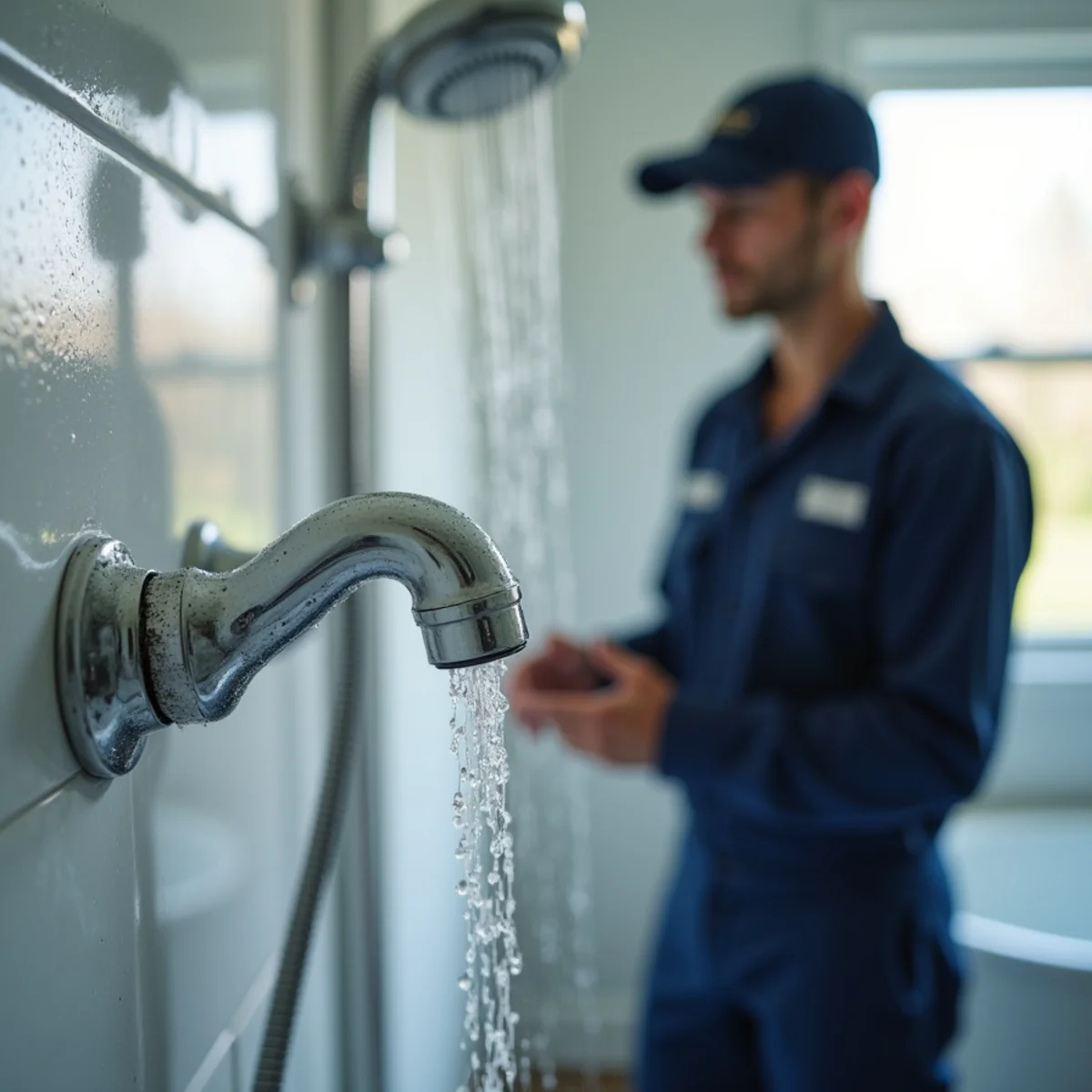
Why Fredericksburg Water Is Hard — And What It's Costing You
Hard water is not a health problem. It is an appliance problem, a fixture problem and a water heater problem — and it is quietly expensive.
Read the guide →
Tankless vs. Tank Water Heaters in Virginia: The Honest Comparison
Tankless is genuinely good technology that gets installed badly more often than almost anything else. Here is when it makes sense and when it does not.
Read the guide →