
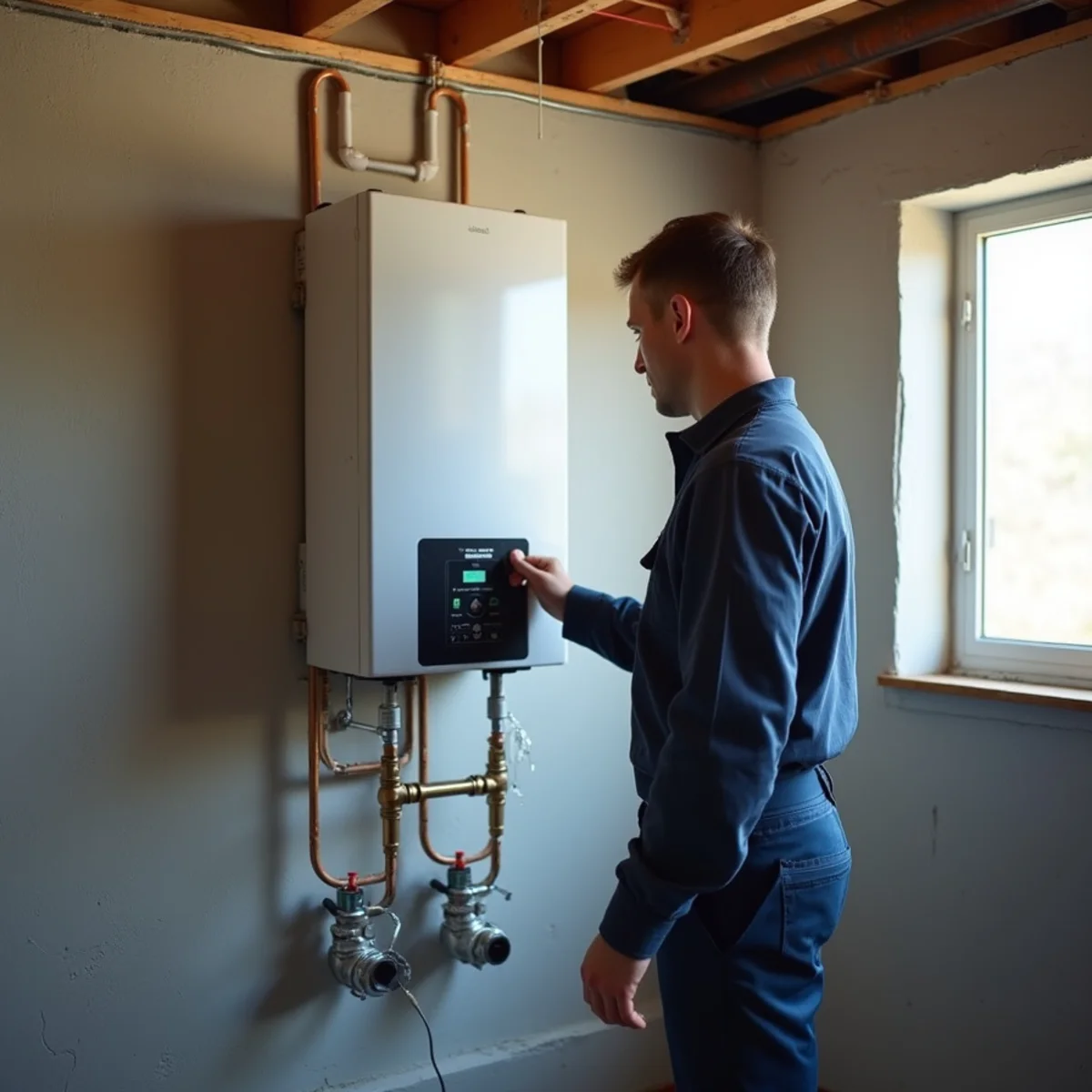
A tankless water heater in Fredericksburg, VA gives endless hot water and roughly twenty years of service — but only when the gas line, venting and water treatment are handled correctly. We survey all three before quoting, and we will tell you when your house is a poor candidate rather than sell you one anyway.
Tankless is a genuinely good technology that gets installed badly more often than almost anything else in this trade. When it works, it is excellent: hot water that does not run out, a unit that lasts twenty years instead of ten, and a wall-mounted box where a 50-gallon drum used to sit. When it is installed on an undersized gas line with a marginal vent run and no attention to water quality, the homeowner spends a decade annoyed.
So before we quote one, we tell you honestly whether your house is a good candidate.
How a tankless water heater actually works
There is no reservoir. When you open a hot tap, a flow sensor detects the movement, the burner fires, and water is heated as it passes through a heat exchanger. Close the tap and the burner shuts off. Nothing is kept hot in between, which is where the standby savings come from.
The trade-off is that output is measured in flow rate, not volume. A unit rated for 7 gallons per minute can supply 7 gallons per minute forever — but not 9. Sizing is therefore about how many fixtures run simultaneously, not how many people live in the house.
Why winter matters for sizing
A tankless unit's rated flow assumes a certain temperature rise. In August, incoming groundwater around Fredericksburg might be in the mid-seventies and the unit barely works to reach 120 degrees. In February that incoming water can be in the forties, and the same unit has to work through a 75-degree rise — which cuts its usable flow rate substantially.
This is why a unit sized on the summer number disappoints in January. We size on winter groundwater temperature. Always.
The gas line question
A 50-gallon atmospheric tank burns around 40,000 BTU. A whole-house tankless unit commonly needs 150,000 to 199,000 BTU. That is not a small increase, and the half-inch line that comfortably fed your old tank will not deliver it.
Correct practice is to calculate the total connected load on the meter, measure the developed length of the run, and size the pipe from the tables. Skipping that step gives you a unit that fires, runs fine on a single shower, and then drops out or throws a flame-failure code the moment the furnace kicks on. If a bid does not mention the gas line at all, ask why.
Condensing versus non-condensing
Non-condensing units are simpler and cheaper to buy, run around 80 to 85 percent efficient, and require stainless steel venting because the exhaust stays hot. Condensing units extract additional heat from the exhaust, reach the mid-90s in efficiency, and vent in PVC — which is cheaper and allows much longer runs. They also produce acidic condensate that needs a drain and a neutralizer.
For most Fredericksburg homes replacing a tank, a condensing unit is the better long-term value, particularly when the venting has to travel any distance to reach an outside wall.
The recirculation question
One honest drawback of tankless: there is a short delay before hot water arrives, because the unit has to sense flow and fire. In a house with a long run to a distant bathroom, that wait can feel worse than it did with a tank.
Several units offer a built-in recirculation pump and a small buffer tank, and there are aftermarket options using a crossover valve at the far fixture. Both work. Both use some energy. We will walk you through whether the convenience is worth it for your particular layout rather than adding it to every quote by default.
When we tell people not to go tankless
If your gas meter is already near capacity and the utility upgrade is expensive. If the venting path would require going through finished space you care about. If you are in a home you plan to sell within two or three years and will not see the payback. And if the only reason on the table is energy savings — the savings are real but modest, and the better arguments for tankless are endless hot water, the space, and the twenty-year life.
What's included when you book tankless water heaters
Every one of these is part of the job, not an add-on we quote separately once we're in your house.
A feasibility survey before any number
Gas meter capacity, existing line size and developed length, venting path, condensate drainage and electrical. This is where bad tankless installs are born.
Sizing on winter groundwater temperature
We count the fixtures you would realistically run at once and size for a February temperature rise, not an August one.
Gas line sized from the load calculation
A tank burns around 40,000 BTU; a whole-house tankless commonly needs 150,000 to 199,000. The half-inch line that fed your tank will not deliver it.
Correct venting and condensate handling
PVC for a condensing unit with neutralization before the condensate enters the waste system; stainless for non-condensing. Permitted and inspected.
Isolation valves with service ports
Fitted on every install so the mandatory annual descale is a quick visit rather than a teardown.
Commissioning and manufacturer registration
Full combustion check, flow verified at each fixture, and the unit registered so your warranty is actually in force.
Signs You Need Tankless Water Heater Installation
You run out of hot water with back-to-back showers
A tank has a fixed reserve. Once it is gone you wait forty minutes. A correctly sized tankless unit does not have that ceiling.
Your mechanical space is tight
A wall-mounted unit gives back the footprint of a 50-gallon tank — meaningful in a townhome utility closet or a finished basement.
Your tank is at end of life anyway
The best time to consider tankless is when you are already replacing. Retrofitting later means paying the venting and gas work as a standalone project.
Your existing tankless is throwing error codes
Most codes point at scale, an ignition fault, a flow sensor, or a venting restriction. Nearly all are repairable — do not let anyone condemn a tankless unit on a code alone.
Hot water output has dropped over the years
Scale buildup inside the heat exchanger is the usual cause in our water. A descale restores flow and efficiency to near-new.
How We Handle It
Check whether your house can actually support one
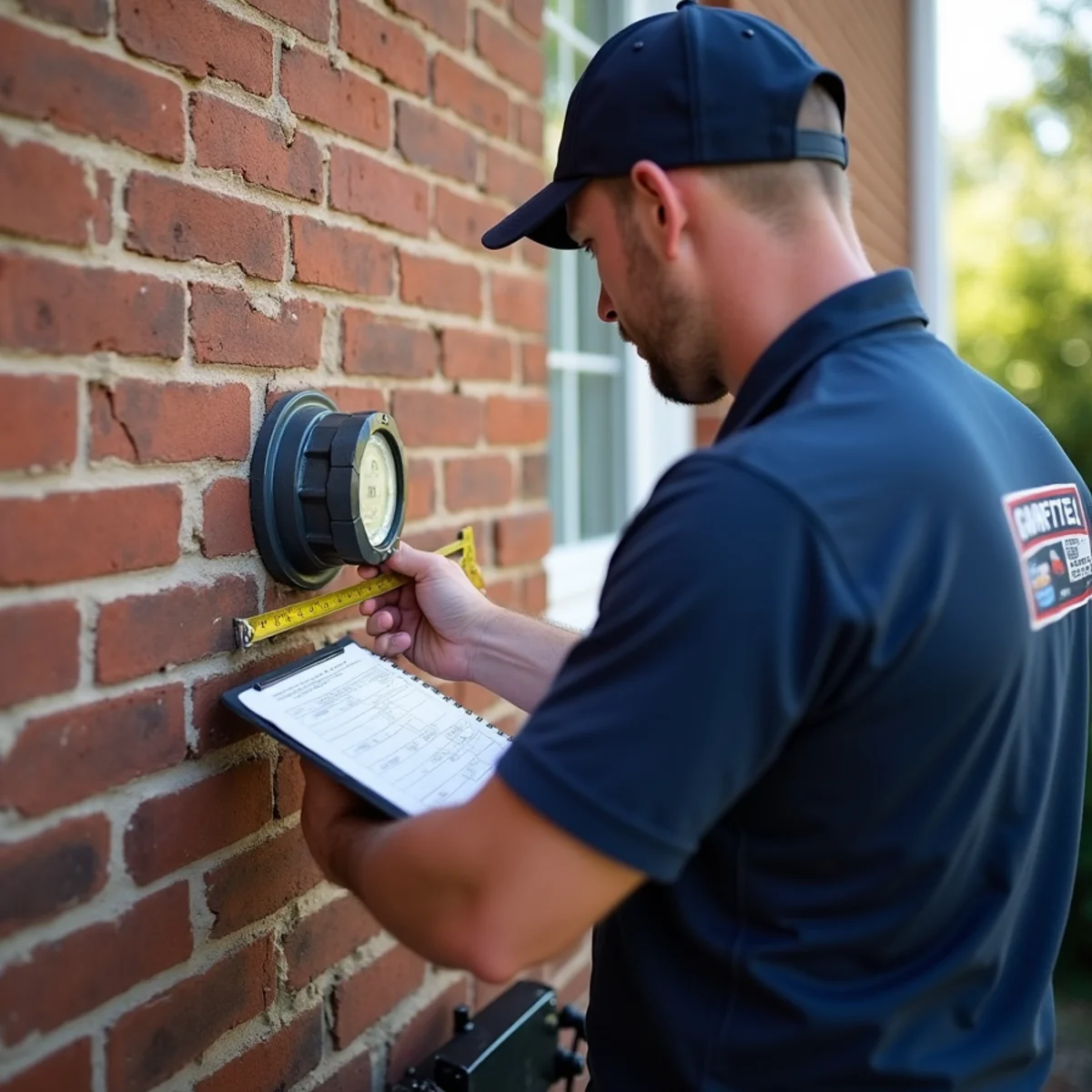
Gas meter capacity, existing line size and length, venting path, condensate drainage, and electrical. We survey all of it before quoting — this is where bad tankless installs are born.
Size for simultaneous demand, not household size
We count the fixtures you would realistically run at once and use the winter groundwater temperature, which is what actually determines flow rate here.
Run the gas and the venting properly
Most tankless units need a larger gas line than a tank did. Undersized gas is the number one cause of a tankless unit that 'never worked right.'
Install water treatment if the water calls for it
In our mineral content, an unprotected heat exchanger scales up. We will recommend a softener or a scale inhibitor when the numbers justify it.
Commission and register it
Full combustion check, flow verification at each fixture, and manufacturer registration so your warranty is actually in force.
What Moves the Price
We don't publish fake numbers, because a firm price quoted before seeing the job is either padded to cover unknowns or revised in your driveway. What we can do is tell you exactly what the estimate depends on, so you can read one and know whether it's fair.
Gas line work
If your existing line is a half-inch run from a distant meter, it will need upsizing. That is often the single biggest line item and it varies enormously by house.
Venting
Condensing units vent in PVC and can run longer distances; non-condensing need stainless. Distance to an approved exterior termination drives the cost.
Condensate handling
Condensing units produce acidic condensate that needs a drain and, in most local jurisdictions, neutralization before it enters the waste system.
Electrical
Gas tankless units need a dedicated receptacle. Electric tankless units need very substantial service — often a panel upgrade, which changes the whole equation.
Water treatment
A softener or scale inhibitor is not strictly required, but in this area it protects a significant investment and extends the descaling interval.
Why choose All Pro Plumbing LLC for tankless water heaters
We quote the gas line, not around it
If a tankless bid does not mention the gas line at all, ask why. It is frequently the single largest line item and it varies enormously house to house.
We talk about descaling before you buy
In this water it is not optional. Skipping it for five years costs a heat exchanger — more than a decade of maintenance would have.
We say no when the answer is no
Meter near capacity, venting through finished space you care about, or a two-year horizon before selling. Those are all reasons we will recommend a tank instead.
Licensed gas fitting, permitted and pressure-tested
The gas side of a tankless install is separately licensed work in Virginia for good reason, and we treat it that way.
Licensed & Insured in Virginia · 4.8 stars from 26 Google reviews · Workmanship guarantee on every repair and installation · written itemized estimate before any work begins.
Where we handle tankless water heaters
We run this work across the City of Fredericksburg, Spotsylvania, Stafford, King George and Caroline counties, plus the Northern Neck, the Middle Peninsula and the adjacent counties within realistic driving range — 42 areas we cover for this work. What the job actually involves changes between them: municipal supply downtown versus private wells out toward Caroline, natural gas versus propane, city permits versus county. Pick your area below for the local version.
- Tankless Water Heaters in Fredericksburg
- Tankless Water Heaters in Downtown Fredericksburg
- Tankless Water Heaters in College Heights
- Tankless Water Heaters in Celebrate Virginia
- Tankless Water Heaters in Idlewild
- Tankless Water Heaters in Spotsylvania
- Tankless Water Heaters in Massaponax
- Tankless Water Heaters in Chancellor
- Tankless Water Heaters in Salem Fields
- Tankless Water Heaters in Lee's Hill
- Tankless Water Heaters in Thornburg
- Tankless Water Heaters in Partlow
- Tankless Water Heaters in Stafford
- Tankless Water Heaters in Falmouth
- Tankless Water Heaters in Ferry Farm
- Tankless Water Heaters in Leeland Station
- Tankless Water Heaters in Garrisonville
- Tankless Water Heaters in Aquia Harbour
- Tankless Water Heaters in Hartwood
- Tankless Water Heaters in Widewater
- Tankless Water Heaters in Bowling Green
- Tankless Water Heaters in Ladysmith
- Tankless Water Heaters in Ruther Glen
- Tankless Water Heaters in Port Royal
- Tankless Water Heaters in King George
- Tankless Water Heaters in Dahlgren
- Tankless Water Heaters in Colonial Beach
- Tankless Water Heaters in Montross
- Tankless Water Heaters in Tappahannock
- Tankless Water Heaters in Kilmarnock
- Tankless Water Heaters in Warsaw
- Tankless Water Heaters in West Point
- Tankless Water Heaters in Dumfries
- Tankless Water Heaters in Triangle
- Tankless Water Heaters in Quantico
- Tankless Water Heaters in Woodbridge
- Tankless Water Heaters in Warrenton
- Tankless Water Heaters in Culpeper
- Tankless Water Heaters in Locust Grove
- Tankless Water Heaters in Orange
- Tankless Water Heaters in Lake Anna
- Tankless Water Heaters in Ashland
Tankless Water Heaters Questions We Get Asked
On energy, modestly — you stop paying to keep 50 gallons hot around the clock. The larger financial argument is service life: a tankless unit maintained annually commonly runs twenty years against eight to twelve for a tank, so you skip a replacement cycle. If you want a purely financial decision, we will run the numbers for your household rather than quoting a national average.
Correct, within their flow rating. A properly sized unit will supply its rated gallons per minute indefinitely. What it will not do is exceed that rating — so if three showers and a dishwasher run at once and the unit was sized for two fixtures, output temperature drops. Sizing is the whole game.
Once a year for descaling, given the mineral content in local water. We install isolation valves with service ports on every unit so the annual flush is quick. Homes with a water softener can often stretch the interval, and we will tell you what your water actually calls for.
Often yes, and that is usually the cleanest install. The constraints are the gas line size, a path for the new venting to an exterior wall, a nearby drain for condensate on a condensing unit, and an electrical receptacle. We check all four before quoting.
For a whole house, rarely. Whole-home electric tankless units draw enormous current — frequently more than an average residential panel can supply without an upgrade. They are a reasonable choice for a single remote fixture or a small addition. For whole-house use in this area, gas is almost always the practical answer.
Related Reading
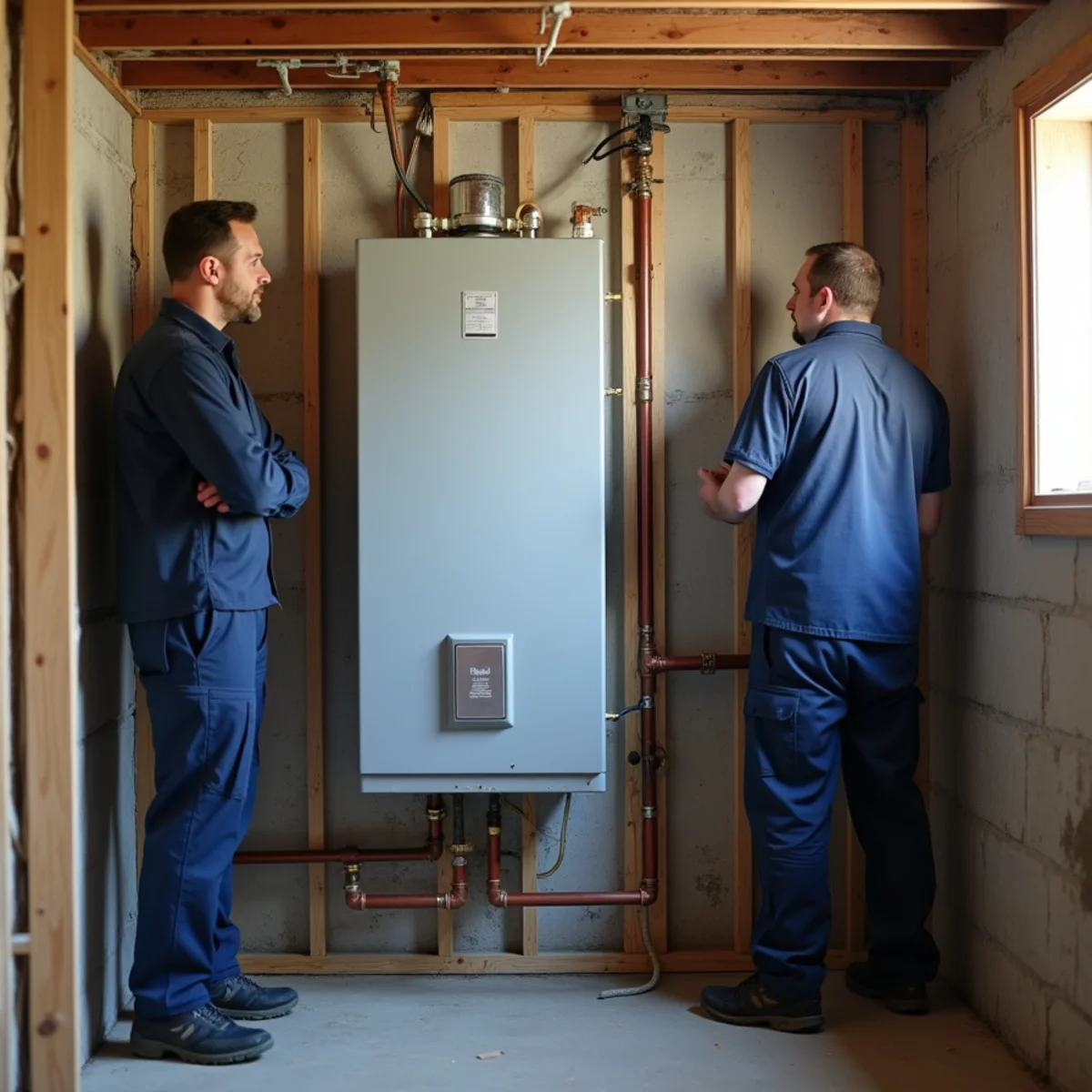
Tankless vs. Tank Water Heaters in Virginia: The Honest Comparison
Tankless is genuinely good technology that gets installed badly more often than almost anything else. Here is when it makes sense and when it does not.
Read the guide →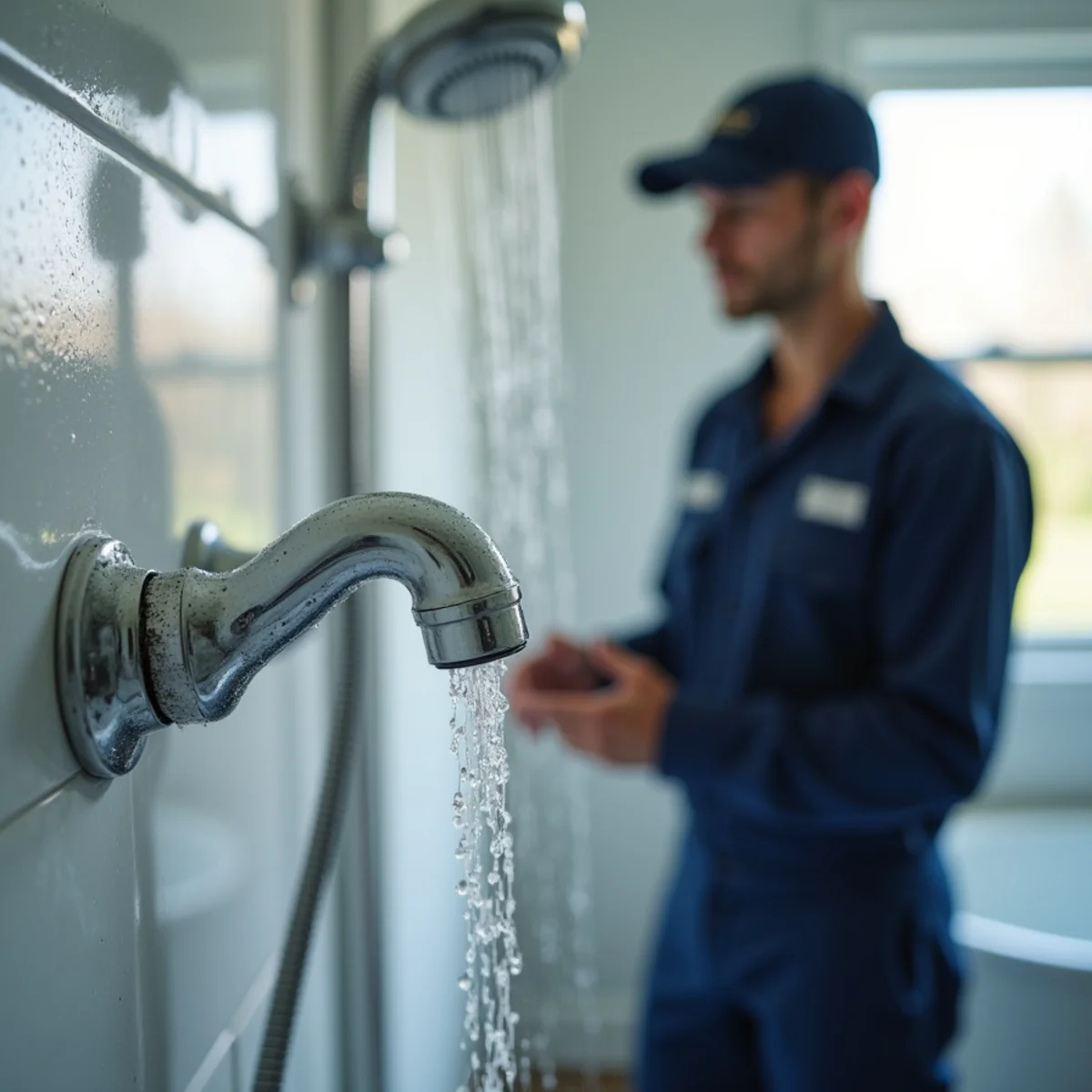
Why Fredericksburg Water Is Hard — And What It's Costing You
Hard water is not a health problem. It is an appliance problem, a fixture problem and a water heater problem — and it is quietly expensive.
Read the guide →