

Whole-house repiping in Fredericksburg, VA replaces failing galvanized or end-of-life copper supply with PEX or copper. In older homes the pipe is the easy part — the skill is routing a new system through closets, chases and attics without destroying plaster, trim and floors that cannot be replaced.
If your 1920s bungalow still has its original galvanized supply, you have probably noticed the water pressure is not what it used to be — and that rusty tint in the bathtub is not just cosmetic. This is one of the most common underlying conditions we find in older Fredericksburg housing stock, and it is the reason a lot of homeowners find themselves calling a plumber every few months.
Why galvanized pipe fails from the inside
Galvanized steel pipe is steel with a zinc coating. The zinc protects the steel — until it wears away, which takes roughly four to five decades depending on water chemistry. After that, the exposed steel corrodes, and the corrosion product builds up as a hard scale on the inside wall of the pipe.
That scale does not build evenly. It builds fastest at threaded joints and elbows, exactly where the wall is thinnest from being cut. So the failure mode is a pipe that looks completely sound from outside, delivers a fraction of its original flow, and eventually lets go at a fitting.
There is no maintenance for it. You cannot clean the inside of a galvanized supply line. Once it is corroding, the only real answer is replacement — which is why we would rather have this conversation with you before a joint fails at 11 p.m. than after.
Copper pinholes and when they mean something
Copper is an excellent material with a long life, but it is not immortal. Copper systems in this area typically develop pinhole leaks after several decades, driven by water chemistry, velocity at elbows, and in some cases installation flux that was never fully flushed.
The key question is whether a leak is isolated or systemic. A single pinhole at a fitting near a high-velocity elbow is a repair. Multiple pinholes across different parts of the house within a year or two is a system telling you it has reached the end. We will not push a repipe off a single leak, and we will not pretend a pattern is coincidence either.
PEX or copper?
We install both, and we do not have a religious position. Here is the practical comparison.
PEX
Flexible cross-linked polyethylene. It snakes through joist bays and wall cavities with far fewer openings than rigid pipe, which is the single biggest advantage in a finished or historic home. It does not corrode, it is quieter, it costs less installed, and it survives a freeze better than copper — it expands and usually recovers rather than splitting. It should not be run in prolonged direct sunlight, and it needs proper support and expansion allowance.
Copper
Rigid, proven over a century, unaffected by UV, and preferred by some homeowners on principle. It costs more in both material and labor, requires more wall openings because it cannot bend around obstacles, and is less forgiving of a hard freeze. There is nothing wrong with choosing it — we will just be honest that in an occupied older home, it means considerably more demolition.
Repiping a historic home without wrecking it
This is where experience actually shows. Plaster over wood lath does not patch like drywall, original trim does not come off and go back on without care, and a lot of the character people bought the house for lives in materials that cannot be replaced.
Our approach in the Historic District and the older parts of College Heights and Mayfield is to route around finished surfaces wherever it is physically possible. Closets, existing chases, basement ceilings, attic floors and the backs of cabinets do most of the work. When we do have to open a wall, we plan the opening: a clean rectangle in a low-visibility location beats three ragged exploratory holes.
And we tell you before we start exactly where we expect to open, what we will patch, and what will need a plasterer or a painter afterward. Nobody should discover the scope of the restoration work on the last day.
What a repipe includes beyond the pipe
A good repipe fixes more than the material. We add proper isolation valves so a future repair does not require shutting down the whole house. We put a working main shutoff in an accessible location — a lot of pre-1960s homes here never had one. We insulate runs that pass through unconditioned space so the pipe that froze last January does not freeze again. And where a pressure-reducing valve or expansion tank is required, we install it correctly rather than leaving a code problem for the next person.
Do you have to move out?
Almost never. Most repipes on an average home run a few days, and we sequence the work so water is restored at the end of each day. You will have dust, you will have plumbers in your house, and one bathroom may be out of service at a time — but people generally stay put.
What's included when you book whole-house repiping
Every one of these is part of the job, not an add-on we quote separately once we're in your house.
Assessment before any recommendation
Pressure test at the hose bib, inspection of exposed runs, a look at the buried service line, and a cut sample where practical. Some houses need one branch, not the whole system.
A designed layout, not a like-for-like copy
A repipe is the chance to fix bad routing — home-run manifolds, sensible isolation, and runs relocated out of spaces that froze last January.
A mapped access plan you approve first
We mark where we expect to open before we start, and put the patching scope in writing. One clean rectangle in a closet beats three exploratory holes.
A working main shutoff and branch isolation valves
Many pre-1960s homes here never had an accessible main shutoff. A future repair should never require shutting down the whole house.
Pressure test and inspection before anything closes
No drywall goes back over an untested joint. Permit pulled and the work inspected.
Insulation on runs through unconditioned space
So the pipe that split last winter does not split again next winter.
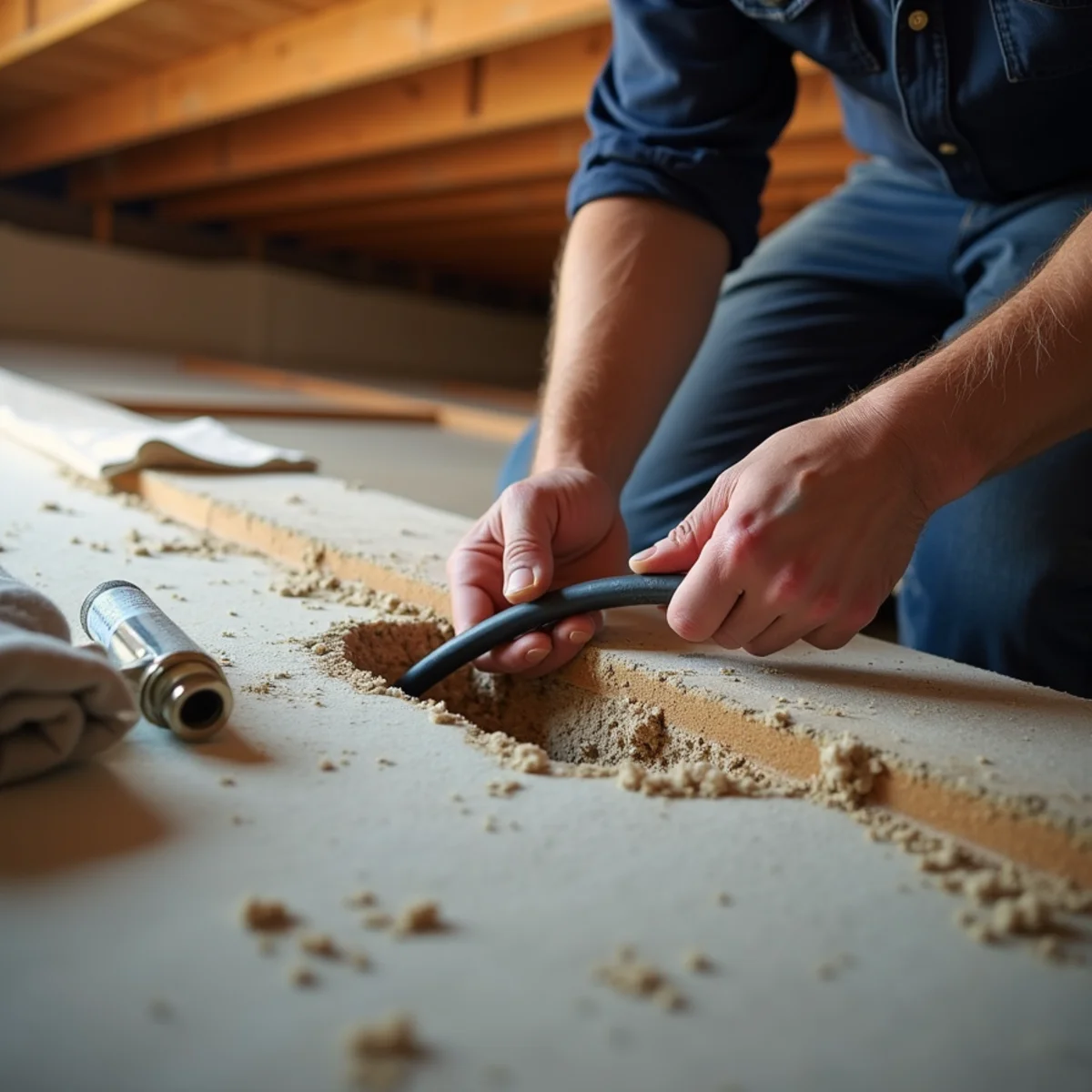
Signs You Need Whole-House Repiping
Rusty or brown water, especially first thing in the morning
Overnight, water sits in the pipe and picks up whatever the pipe wall is shedding. Discoloration after a long idle period is a classic galvanized signature.
Water pressure that has faded over years
Galvanized corrodes inward. A three-quarter-inch line can close down to a quarter inch of usable opening while looking perfectly fine from the outside.
Pinhole leaks appearing in copper
One pinhole is a repair. Three in eighteen months means the whole system is at the same point in its life and you are on the front edge of a wave.
Pressure drops hard when a second tap opens
Restricted supply lines cannot serve two fixtures. If the shower goes cold when someone runs the kitchen sink, the pipe is the bottleneck.
Your home was built before 1970 and has original supply
Galvanized steel had a service life of roughly 40 to 50 years. Anything original from that era is well past it.
How We Handle It
Assess before we recommend
Pressure test at the hose bib, inspect exposed runs, check the water main, and cut a sample section where practical. Some houses need a partial repipe, not a whole one.
Design the new layout
A repipe is a chance to fix bad routing. Home-run manifolds, better isolation valves, insulated runs where pipes previously froze, and a proper main shutoff.
Plan the access — carefully
In an older home this is the part that matters most. We map the route to use closets, chases, attics and crawl spaces before we touch plaster.
Install, pressure test, inspect
The system is pressure tested and inspected before anything is closed up. No drywall goes back over an untested joint.
Patch and restore
We patch what we opened. We tell you in writing beforehand whether that is drywall to paint-ready or plaster to a skim coat, and where you will need a painter.
What Moves the Price
We don't publish fake numbers, because a firm price quoted before seeing the job is either padded to cover unknowns or revised in your driveway. What we can do is tell you exactly what the estimate depends on, so you can read one and know whether it's fair.
Number of fixtures and bathrooms
The scope is really counted in fixtures, not square feet. A 1,400 square foot home with three bathrooms is a bigger job than a 2,200 square foot home with one and a half.
PEX or copper
PEX costs less in material and labor, tolerates a freeze better, and needs far fewer wall openings. Copper costs more and some homeowners prefer it. We install both properly.
Access and finish materials
An unfinished basement and an accessible attic make a repipe dramatically cheaper. Plaster-and-lath walls, tile surrounds and finished ceilings add real time.
Number of stories
Getting supply up to a second or third floor without opening the main living space takes routing creativity and time.
Whether the main service line is included
Sometimes the house is fine and the culprit is the buried line from the meter. Sometimes it is both. We test to find out rather than assuming.
Why choose All Pro Plumbing LLC for whole-house repiping
We repipe historic homes without gutting them
Plaster over wood lath does not patch like drywall. PEX bends around obstacles that rigid copper would require opening a wall to accommodate, and in a downtown house that difference decides whether original plaster survives.
We will recommend a partial repipe
If one branch produced all the problems and the rest of the system is sound, replacing that branch costs a fraction. We say so rather than defaulting to the larger job.
We do not push a repipe off one leak
A single pinhole at a high-velocity elbow is a repair. Pattern is what matters — and we will not pretend a pattern is coincidence either.
You stay in the house
Most repipes run a few days and we sequence the work so water is restored at the end of every day. Almost nobody has to move out.
Licensed & Insured in Virginia · 4.8 stars from 26 Google reviews · Workmanship guarantee on every repair and installation · written itemized estimate before any work begins.
Where we handle whole-house repiping
We run this work across the City of Fredericksburg, Spotsylvania, Stafford, King George and Caroline counties, plus the Northern Neck, the Middle Peninsula and the adjacent counties within realistic driving range — 42 areas we cover for this work. What the job actually involves changes between them: municipal supply downtown versus private wells out toward Caroline, natural gas versus propane, city permits versus county. Pick your area below for the local version.
- Whole-House Repiping in Fredericksburg
- Whole-House Repiping in Downtown Fredericksburg
- Whole-House Repiping in College Heights
- Whole-House Repiping in Celebrate Virginia
- Whole-House Repiping in Idlewild
- Whole-House Repiping in Spotsylvania
- Whole-House Repiping in Massaponax
- Whole-House Repiping in Chancellor
- Whole-House Repiping in Salem Fields
- Whole-House Repiping in Lee's Hill
- Whole-House Repiping in Thornburg
- Whole-House Repiping in Partlow
- Whole-House Repiping in Stafford
- Whole-House Repiping in Falmouth
- Whole-House Repiping in Ferry Farm
- Whole-House Repiping in Leeland Station
- Whole-House Repiping in Garrisonville
- Whole-House Repiping in Aquia Harbour
- Whole-House Repiping in Hartwood
- Whole-House Repiping in Widewater
- Whole-House Repiping in Bowling Green
- Whole-House Repiping in Ladysmith
- Whole-House Repiping in Ruther Glen
- Whole-House Repiping in Port Royal
- Whole-House Repiping in King George
- Whole-House Repiping in Dahlgren
- Whole-House Repiping in Colonial Beach
- Whole-House Repiping in Montross
- Whole-House Repiping in Tappahannock
- Whole-House Repiping in Kilmarnock
- Whole-House Repiping in Warsaw
- Whole-House Repiping in West Point
- Whole-House Repiping in Dumfries
- Whole-House Repiping in Triangle
- Whole-House Repiping in Quantico
- Whole-House Repiping in Woodbridge
- Whole-House Repiping in Warrenton
- Whole-House Repiping in Culpeper
- Whole-House Repiping in Locust Grove
- Whole-House Repiping in Orange
- Whole-House Repiping in Lake Anna
- Whole-House Repiping in Ashland
Whole-House Repiping Questions We Get Asked
The pattern matters more than any single symptom. Discolored water after the system sits idle, static pressure below 40 PSI, and repeated leaks in different parts of the house together indicate a system at end of life. A single leak with good pressure and clear water is a repair. We test rather than guess, and we will tell you when a partial repipe of one problem branch is the smarter spend.
Yes. PEX used for potable water is certified to NSF/ANSI 61 and 372 and has been the dominant residential supply material in the United States for years. Some homeowners notice a faint taste in the first days after installation; flushing the system thoroughly resolves it.
For a typical single-family home, a few days for the pipe work plus patching afterward. Access drives it more than size — an unfinished basement and a usable attic can cut the schedule substantially, while plaster walls and finished ceilings extend it. You will have water at the end of every workday.
Yes, and we put the scope in writing before we start: which openings we expect to make, what gets patched to what standard, and where you will want a painter or a plaster specialist. In historic homes we route around finished surfaces wherever it is physically possible precisely to keep that list short.
Not automatically — the buried service line from the meter to the house is a separate component. Sometimes it is the actual cause of low pressure and the interior pipe is fine. We test both and tell you which one is your problem rather than replacing everything by default.
Related Reading
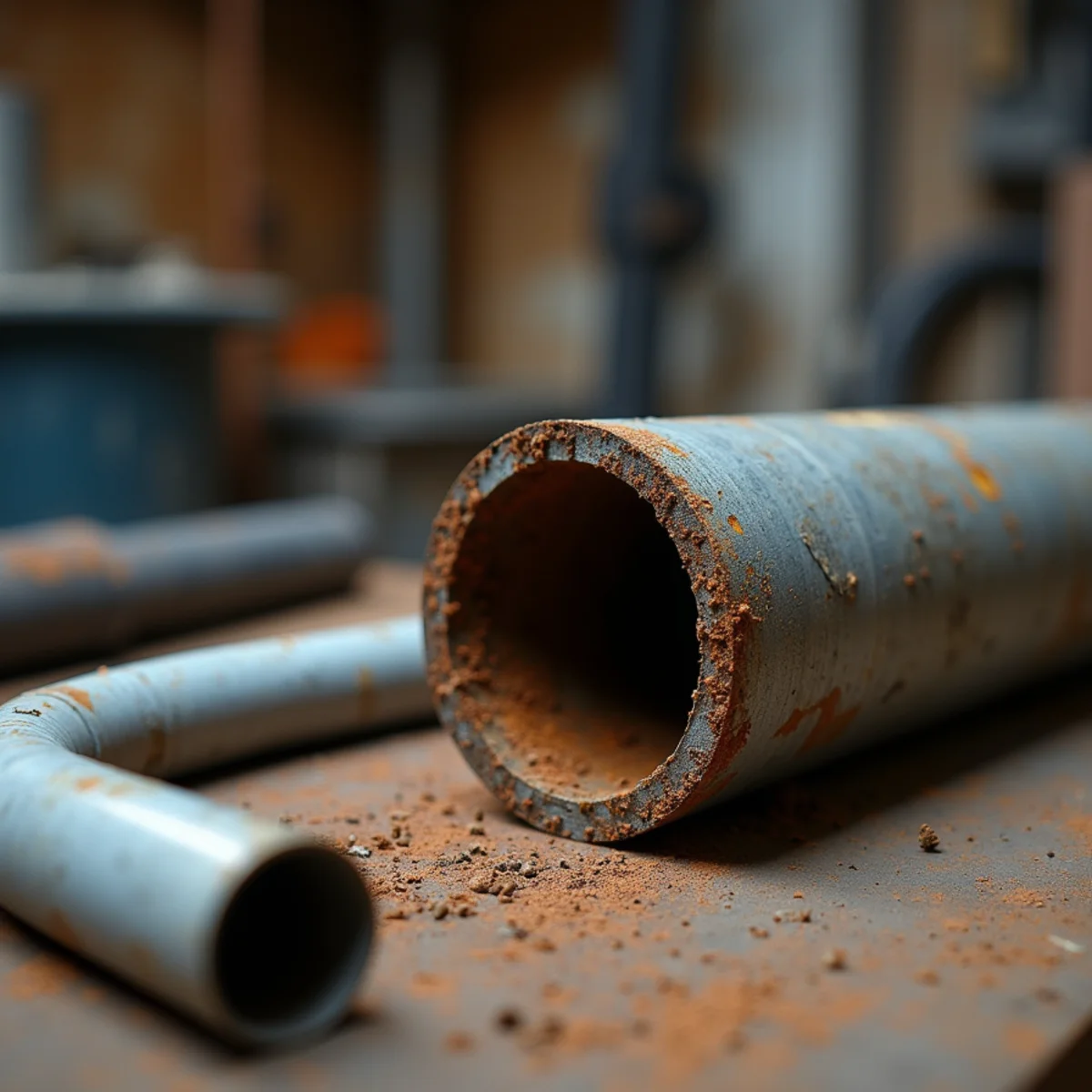
7 Signs Your Old Fredericksburg Home Needs Repiping
A single leak is a repair. A pattern is a system telling you something. Here is how to tell which one you have before you spend money on either.
Read the guide →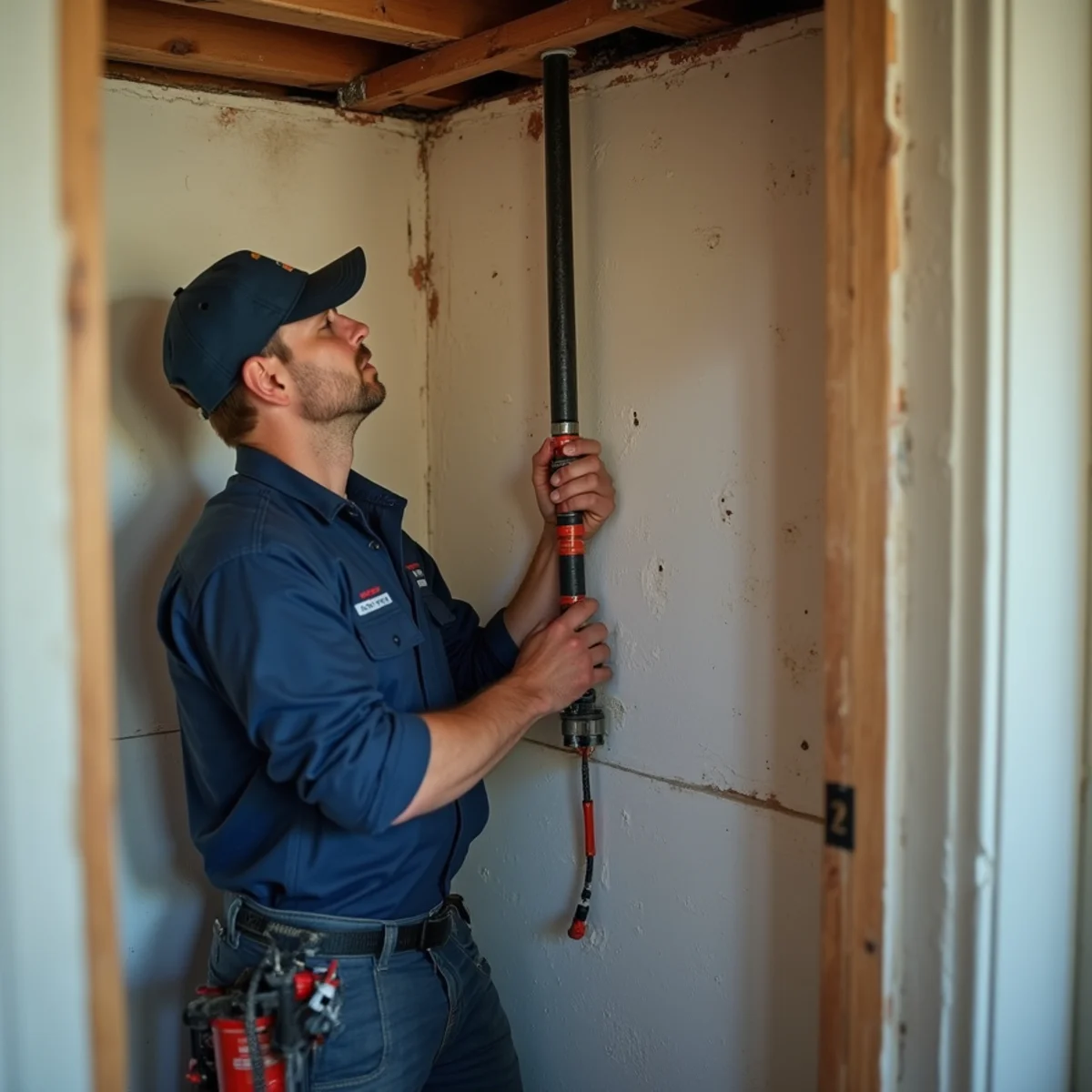
Replacing Galvanized Pipe in a Historic Home: A Practical Guide
The pipe is the easy part. Getting a new system into a 120-year-old house without wrecking what makes it worth owning is the actual job.
Read the guide →