
Sump pump installation in Fredericksburg, VA starts with finding out where the water is actually coming from. A pump handles groundwater rising from below — if the source is a clogged gutter or a downspout discharging at the foundation, no pump fixes that, and we will tell you so before selling you one.
Fredericksburg sits in a region that gets serious rain. Tropical remnants track up the Rappahannock corridor in late summer, spring storms park over the area for days, and the clay-heavy soil around here does not absorb water quickly — it holds it and moves it laterally toward the lowest opening it can find. Frequently that is your foundation.
A sump pump is the appliance that matters on maybe three days a year. The other 362 days, it sits in a hole doing nothing, which is exactly why so many of them are quietly dead when the storm finally comes.
Before you buy a bigger pump, check the water's source
We would rather solve your problem than sell you equipment. A meaningful share of basement water calls turn out to have causes above ground:
- Gutters that overflow because they are full of leaves — dumping hundreds of gallons directly against the foundation during every rain.
- Downspouts that discharge within a few feet of the wall instead of being extended out and away.
- Grading that slopes toward the house. Soil settles over the years around a foundation, and eventually the yard drains inward.
- Window wells with no drainage that fill and overflow through the window frame.
- A failed or crushed exterior footing drain, which is a bigger project but at least an identifiable one.
Fix those first where they apply. A sump pump handles groundwater rising from below, and it should not be your primary defense against roof runoff.
Sizing a pump properly
The capacity number on the box is measured at zero lift. Your pump is not operating at zero lift — it is pushing water eight or ten feet vertically and then some distance horizontally, and each of those costs flow. A pump rated at 3,000 gallons per hour might deliver closer to 2,000 in a real basement installation.
We measure the actual vertical lift and discharge run, then size from the pump's performance curve rather than its headline number. We also watch the pit during a wet period where possible, because inflow rate is the number that actually matters.
Horsepower is not the whole story
A one-third horsepower pump handles the majority of residential situations. Going to one-half or three-quarters helps when lift is high or inflow is heavy, but an oversized pump in a small pit short-cycles — starting and stopping constantly, which is what actually kills pump motors. Correct pit volume matters as much as pump size.
The details that make a sump system reliable
Beyond the pump itself, these are the things we check on every install and that we routinely find wrong on existing systems:
- Check valve. Without one, the water in the discharge pipe falls back into the pit every time the pump shuts off, and the pump immediately runs again to move the same water. It is the most common cause of short-cycling.
- Weep hole. A small hole drilled in the discharge pipe below the check valve prevents an air lock that can leave the pump spinning and pumping nothing.
- Discharge termination. Water needs to exit at least ten feet from the foundation and downhill. A discharge that dumps at the corner of the house is recirculating water back into the pit.
- Freeze protection at the exit. A discharge line that freezes closed in January turns a working pump into a dead one. The termination needs to be designed so it cannot seal shut with ice.
- A proper lid. An open pit vents soil gas and humidity into the basement and lets debris fall in. A sealed lid with a grommet for the pipe and the cord solves both.
- A dedicated circuit with GFCI. Not shared with the freezer that trips it.
Battery backup: what it does and does not do
The storms that produce the most groundwater are the same storms that knock out power. A primary pump without a backup is protection that fails at exactly the moment of maximum need. This is not a hypothetical in this region — it happens somewhere in the area every year.
A battery backup system is a second, DC-powered pump with its own float, wired to a charger and a deep-cycle battery. When utility power drops or the primary pump fails, it takes over automatically. Runtime depends on inflow rate and battery capacity, and a good system will typically carry a house through a normal outage.
What it is not: a permanent solution to a pump that is undersized for the inflow, or a substitute for maintaining the primary. It is insurance, and it should be tested along with everything else.
Crawl spaces
Plenty of homes around Fredericksburg and out into Spotsylvania and Caroline sit on crawl spaces rather than basements, and the water problem there looks different. Standing water in a crawl space is a humidity problem before it is a structural one — moisture rises into the living space, drives up cooling costs, and creates conditions for mold and wood decay.
The solution set includes a properly installed vapor barrier, a sump pit and pump where water actually collects, correcting exterior drainage, and in some cases full encapsulation with a dehumidifier. We will tell you honestly which parts of that your crawl space needs — most do not need all of it.
What's included when you book sump pumps & waterproofing
Every one of these is part of the job, not an add-on we quote separately once we're in your house.
Source diagnosis before equipment
Gutters, downspout discharge distance, grading, window wells and footing drains. A meaningful share of basement water calls have causes above ground.
Sizing at your actual total head
The number on the box is measured at zero lift. We size from the performance curve at your real vertical lift and discharge run, where a 3,000 GPH pump may deliver closer to 2,000.
Pit volume matched to the pump
An oversized pump in a small pit short-cycles, and short-cycling is what actually kills pump motors.
Check valve, weep hole and correct discharge
A check valve so discharge water does not fall back into the pit, a weep hole to prevent airlock, and a termination at least ten feet out, downhill, and designed so it cannot ice closed in January.
Sealed lid and a dedicated GFCI circuit
A sealed lid keeps soil gas and humidity out of the basement. The pump does not share a circuit with the chest freezer that will eventually trip it.
Tested under load before we leave
Pit filled and run through complete cycles, including the backup. An untested sump pump is an assumption.
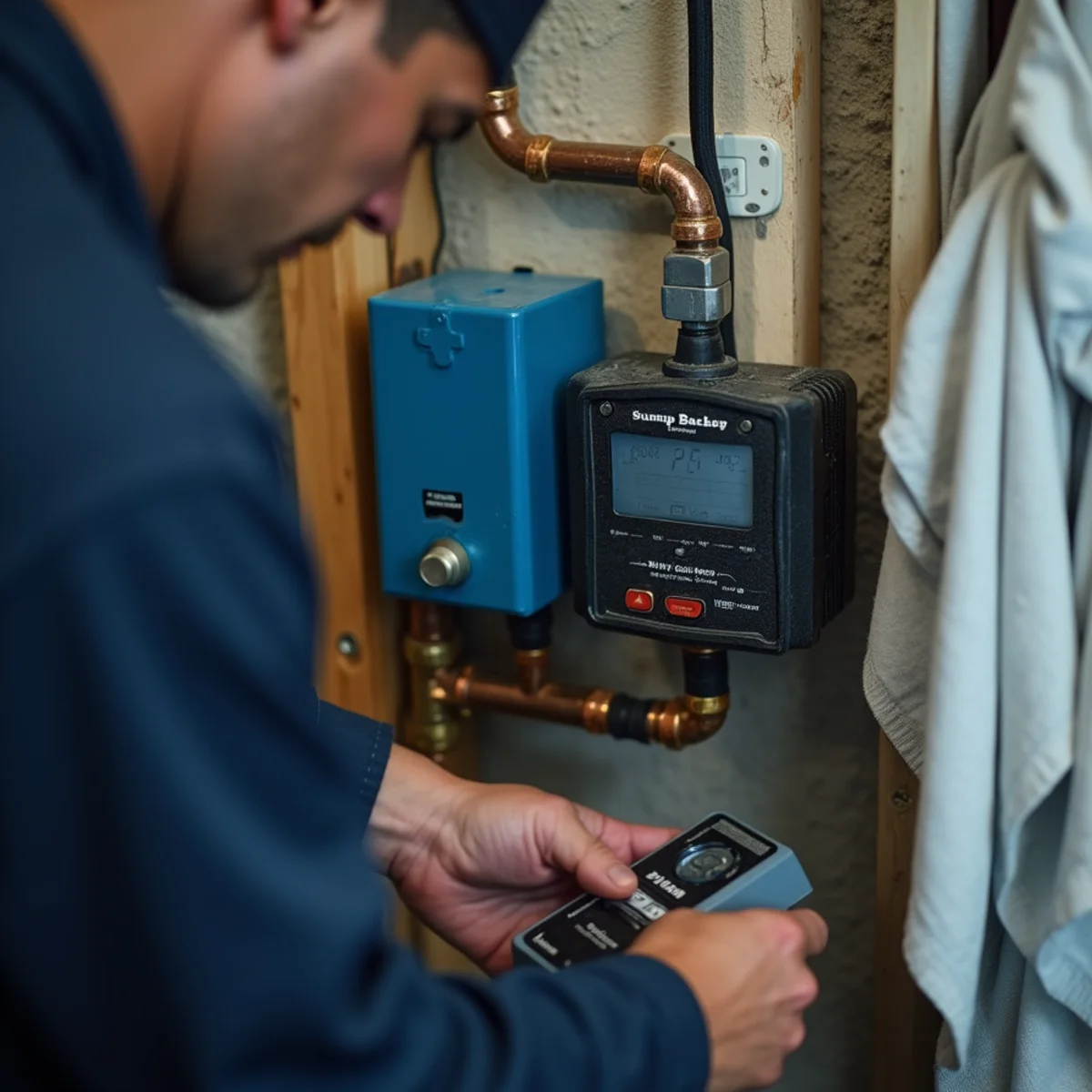
Signs You Need Sump Pump Installation & Repair
The pump runs constantly or cycles every few minutes
Short-cycling means the pit is undersized, the check valve is failing, or the float is set wrong. It burns pumps out years early.
It makes noise but does not move water
A seized impeller, a clogged intake screen, or a stuck check valve. The motor is fine and the pump is doing nothing.
Water in the basement after the pump ran
The pump kept up until it did not. That is a capacity problem, a discharge problem, or a pump that failed partway through the storm.
The pump is more than seven years old
Sump pumps are consumables. Replacing one on your schedule costs a fraction of replacing it after it fails during a storm.
You have no backup and a finished basement
Storms cause power outages. A primary pump with no battery backup is protection that switches off precisely when you need it.
How We Handle It
Find out why water is in the pit
A pump manages groundwater. If the actual problem is a failed gutter, negative grading or a downspout dumping at the foundation, we will tell you — a bigger pump is not the fix for a drainage problem.
Size the pump to the real inflow
Gallons per hour at the actual discharge head, not the marketing number on the box. Vertical lift and pipe run both cut real-world capacity substantially.
Fix the discharge, not just the pump
Correct check valve, a weep hole to prevent airlock, and a discharge line that terminates well away from the foundation with freeze protection at the exit.
Add backup that matches the risk
Battery backup for power outages, or a second pump for high-inflow pits. We explain what each one actually protects against.
Test it under load
We fill the pit and run the system through complete cycles, including the backup, before we leave. An untested sump pump is an assumption.
What Moves the Price
We don't publish fake numbers, because a firm price quoted before seeing the job is either padded to cover unknowns or revised in your driveway. What we can do is tell you exactly what the estimate depends on, so you can read one and know whether it's fair.
Pump type and horsepower
Submersible units cost more than pedestal and last longer. Cast iron bodies dissipate heat better than plastic and are worth the difference in a hard-working pit.
Whether the pit and discharge already exist
A straight swap into a good pit is quick. Cutting a new pit into a concrete floor, or running new discharge piping, is a much larger job.
Backup system choice
A battery backup with a maintenance-free AGM battery, a water-powered backup where municipal pressure allows, or a full second pump on a separate circuit.
Discharge routing
Getting water far enough from the foundation sometimes means a long buried line and a pop-up emitter, which is real trenching work.
Related drainage work
Interior perimeter drain, crawl space encapsulation and exterior grading are separate scopes we will identify honestly rather than bundling silently.
Why choose All Pro Plumbing LLC for sump pumps & waterproofing
We would rather solve it than sell equipment
Fixing gutters and extending downspouts is cheaper and more effective than upsizing a pump being asked to handle roof runoff.
Battery backup because of how storms work here
The weather that raises the water table is the weather that drops the power. A primary pump alone is protection that switches off at the moment of maximum need.
We know the discharge problem on tight lots
On waterfront and compact parcels around Widewater and Aquia, a discharge dumping at the corner of the house recirculates. Getting it right sometimes means a buried line to a pop-up emitter.
We tell you to test it yourself
Five gallons into the pit, twice a year. Two minutes that catches a dead pump before the storm rather than during it.
Licensed & Insured in Virginia · 4.8 stars from 26 Google reviews · Workmanship guarantee on every repair and installation · written itemized estimate before any work begins.
Where we handle sump pumps & waterproofing
We run this work across the City of Fredericksburg, Spotsylvania, Stafford, King George and Caroline counties, plus the Northern Neck, the Middle Peninsula and the adjacent counties within realistic driving range — 42 areas we cover for this work. What the job actually involves changes between them: municipal supply downtown versus private wells out toward Caroline, natural gas versus propane, city permits versus county. Pick your area below for the local version.
- Sump Pumps & Waterproofing in Fredericksburg
- Sump Pumps & Waterproofing in Downtown Fredericksburg
- Sump Pumps & Waterproofing in College Heights
- Sump Pumps & Waterproofing in Celebrate Virginia
- Sump Pumps & Waterproofing in Idlewild
- Sump Pumps & Waterproofing in Spotsylvania
- Sump Pumps & Waterproofing in Massaponax
- Sump Pumps & Waterproofing in Chancellor
- Sump Pumps & Waterproofing in Salem Fields
- Sump Pumps & Waterproofing in Lee's Hill
- Sump Pumps & Waterproofing in Thornburg
- Sump Pumps & Waterproofing in Partlow
- Sump Pumps & Waterproofing in Stafford
- Sump Pumps & Waterproofing in Falmouth
- Sump Pumps & Waterproofing in Ferry Farm
- Sump Pumps & Waterproofing in Leeland Station
- Sump Pumps & Waterproofing in Garrisonville
- Sump Pumps & Waterproofing in Aquia Harbour
- Sump Pumps & Waterproofing in Hartwood
- Sump Pumps & Waterproofing in Widewater
- Sump Pumps & Waterproofing in Bowling Green
- Sump Pumps & Waterproofing in Ladysmith
- Sump Pumps & Waterproofing in Ruther Glen
- Sump Pumps & Waterproofing in Port Royal
- Sump Pumps & Waterproofing in King George
- Sump Pumps & Waterproofing in Dahlgren
- Sump Pumps & Waterproofing in Colonial Beach
- Sump Pumps & Waterproofing in Montross
- Sump Pumps & Waterproofing in Tappahannock
- Sump Pumps & Waterproofing in Kilmarnock
- Sump Pumps & Waterproofing in Warsaw
- Sump Pumps & Waterproofing in West Point
- Sump Pumps & Waterproofing in Dumfries
- Sump Pumps & Waterproofing in Triangle
- Sump Pumps & Waterproofing in Quantico
- Sump Pumps & Waterproofing in Woodbridge
- Sump Pumps & Waterproofing in Warrenton
- Sump Pumps & Waterproofing in Culpeper
- Sump Pumps & Waterproofing in Locust Grove
- Sump Pumps & Waterproofing in Orange
- Sump Pumps & Waterproofing in Lake Anna
- Sump Pumps & Waterproofing in Ashland
Sump Pumps & Waterproofing Questions We Get Asked
Typically seven to ten years, and less in a pit that runs frequently. They are consumable equipment, not permanent fixtures. Replacing a pump proactively at year eight costs a fraction of replacing it after it fails mid-storm with water on the floor.
If you have a finished basement, store anything you care about down there, or travel regularly — yes. The storms that generate the most groundwater are the same storms that cause power outages, so a pump on utility power alone is offline exactly when it matters. If your basement is bare concrete storage and you are always home, it is a judgment call.
A high water table keeps groundwater in the pit regardless of recent rain, which is normal in some low-lying areas here. Other causes are a failing check valve letting discharge water fall back into the pit, a stuck float, or an underground spring. Constant running with no rain is worth investigating.
No, and it is prohibited in this area. Groundwater discharged into the sanitary sewer overloads the treatment system, and jurisdictions enforce it. Discharge must go outside, at least ten feet from the foundation and directed away from your house and your neighbor's.
Sometimes, but not always. We look at exterior drainage and grading first, because a crawl space that floods from roof runoff needs gutters and downspouts corrected, not a pump. Where groundwater genuinely collects, a pit with a properly sized pump plus a vapor barrier is the right combination.
Related Reading
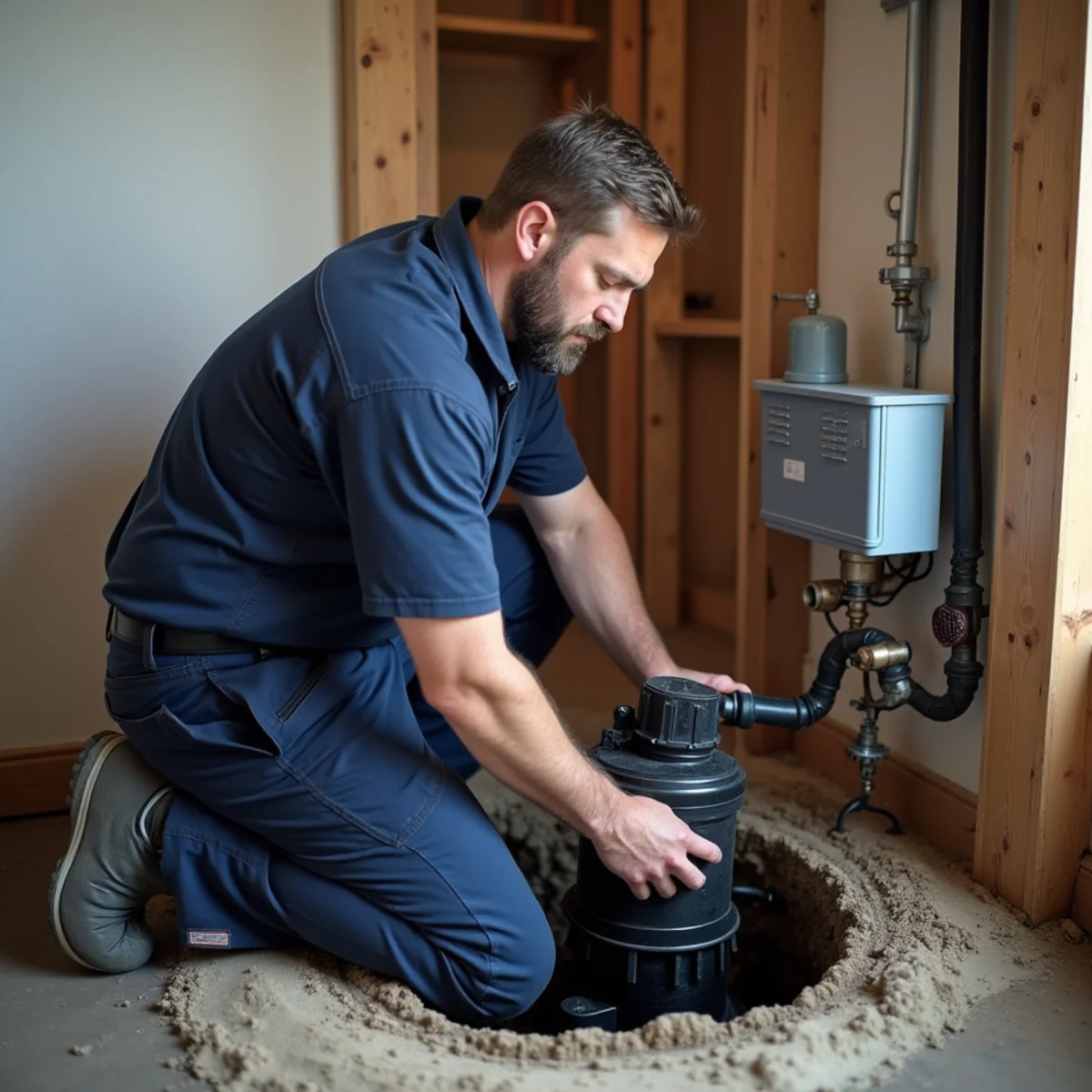
Standing Water in Your Yard: What to Check Before You Call Anyone
A surprising share of standing-water calls turn out to be roof water, which is the cheapest thing on the list to fix. Here is how to find out which problem you have before anyone quotes you a trench.
Read the guide →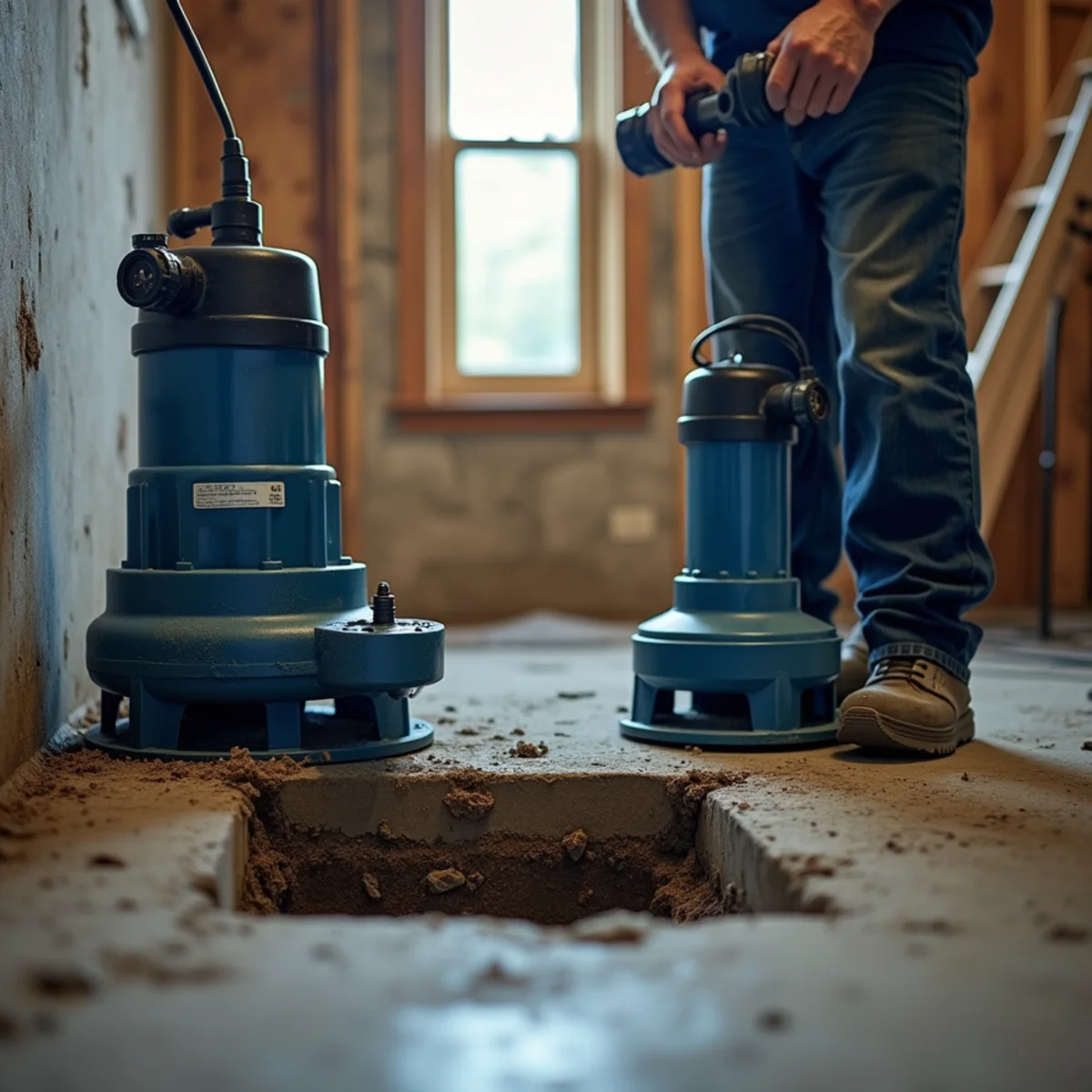
Sump Pump Buying Guide for Fredericksburg Basements
The appliance that only matters on three days a year. Here is how to pick one, install it properly, and make sure it actually runs when the storm arrives.
Read the guide →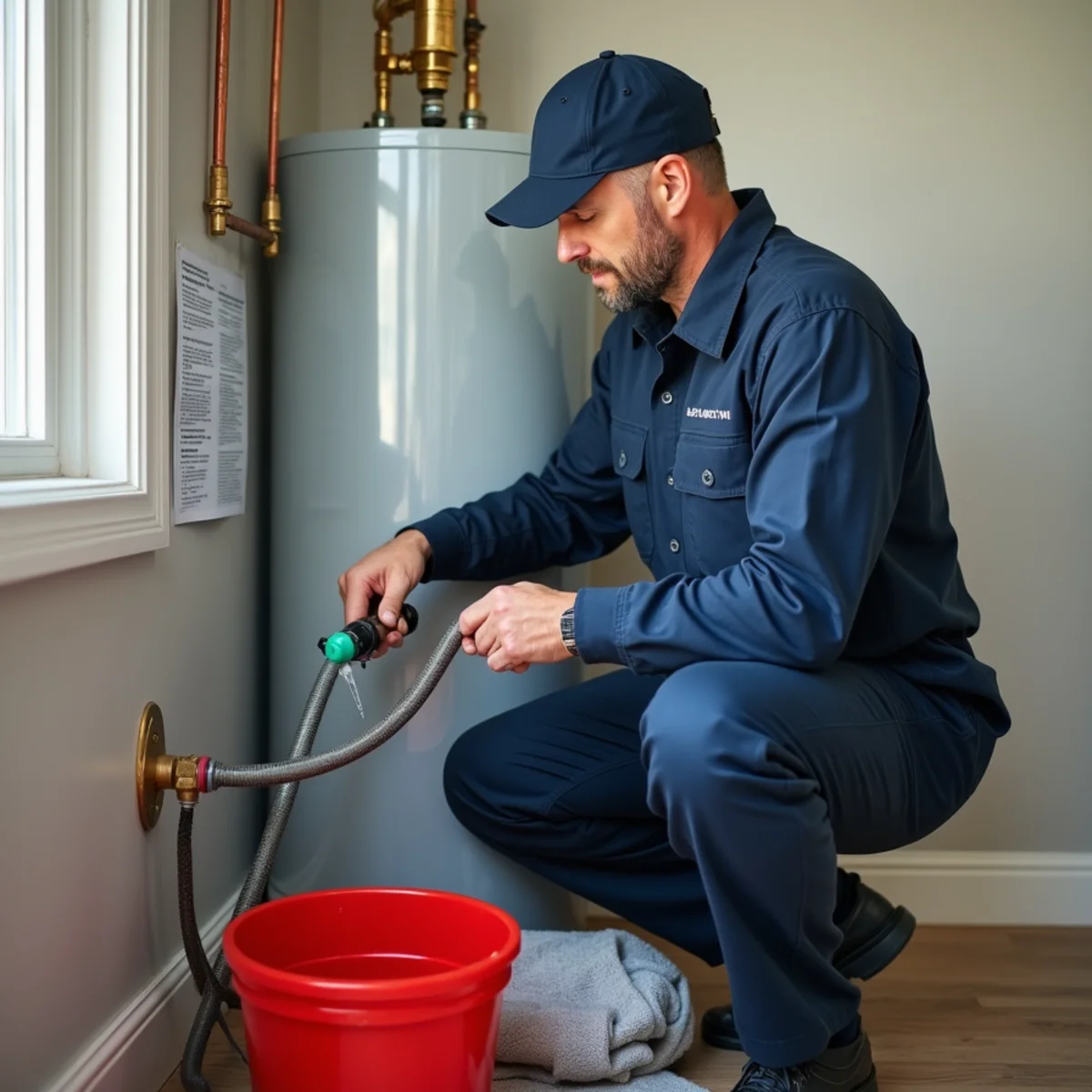
The Annual Plumbing Maintenance Checklist for Virginia Homeowners
Nearly every emergency we run was preventable. Here is the season-by-season list — most of it free, most of it under ten minutes an item.
Read the guide →