
Outdoor drainage in Fredericksburg, VA starts with finding where the water comes from and confirming there is somewhere lower for it to go. Roof water, surface runoff and a high water table are three different problems with three different fixes, and a surprising share of standing-water calls turn out to be a downspout rather than a yard.
Outdoor drainage is the work of collecting water that is sitting where it should not be and transporting it somewhere it can leave. On a Fredericksburg-area property that usually means roof water, surface runoff, or a high water table in heavy soil — and the three are fixed differently, which is why the diagnosis matters more than the pipe.
It is also a service where the honest answer is sometimes cheaper than expected. A property drainage assessment is free here, and a large share of the standing-water calls we look at turn out to be a downspout problem rather than a yard problem — fixing a downspout costs a fraction of trenching a lawn.
Where the water is actually coming from
Before any drainage contractor should quote you pipe, somebody needs to establish the source. A roof sheds a surprising volume in one storm, and if it is discharging at the corner of the house, the wet patch twenty feet away may simply be where that water ends up. Fix the roof water and the yard problem can disappear on its own.
Surface runoff coming off a neighbouring grade is a different problem and usually needs an interception line across the slope. A high water table in heavy clay is different again — that water is not arriving from anywhere, it is already in the ground and has nowhere to go. Each of those gets a different system, and installing the wrong one is how people end up with an expensive trench that did not help.
French drains, yard drains and downspout lines are not the same thing
These terms get used interchangeably in quotes, and they should not be. The distinction is simply whether the water you are dealing with is sitting on the ground or in it.
- A French drain is perforated pipe in a gravel envelope wrapped in filter fabric, buried to collect water out of saturated soil — for a soggy lawn or water moving through the ground toward a foundation
- Yard drains and catch basins are grated inlets set at low points to take standing surface water off the top of the ground, piped away in solid line
- Buried downspout leaders take roof water from the gutter system and carry it well away from the house in solid pipe — no perforations, because you are transporting water rather than collecting it
- A dry well is a buried void that accepts water and lets it percolate away, used where there is no outlet to daylight
- A channel or trench drain is a long linear grate set across a driveway or patio to intercept sheet flow before it reaches a garage or a door
Most properties that genuinely need drainage work end up with a combination — roof water in solid pipe, a collection line where the ground stays wet, and both tied into a single outlet.
Downspouts: the cheapest fix most people skip
If water is getting into a crawl space or basement, the first thing to look at is where the roof water goes. Gutters that discharge at the base of the wall put thousands of gallons a year directly against the footing, and no amount of interior sealing will out-argue that.
Burying the leaders in solid PVC and carrying them to a proper outlet is often the entire fix, and it is a fraction of what a full perimeter system costs. We check this first on every drainage call because recommending the expensive version when the cheap version would have worked is not a service.
The outlet problem: drainage has to go somewhere
Every drainage system is a transport system, and transport needs a destination at a lower elevation that can accept the water. This is the constraint that decides what is possible on a given lot, and it is the question least often asked before a trench is dug.
On a sloping lot the answer is usually a daylight outlet with a pop-up emitter or an open end on the fall. On a flat lot it may be a dry well, and in some cases a pumped system — which introduces an appliance that will eventually need service and should be the last resort rather than the first design. What you cannot do is tie yard drainage into the sanitary sewer. That is prohibited, it overloads the treatment system, and in a heavy storm it is a route for sewage to come back the other way.
Sump pump discharge is part of this
A sump pump and a yard drainage system are two halves of the same problem, and they are frequently installed by different people who never speak. A pump discharging a few feet from the wall is lifting water out of the pit and handing it straight back to the soil that fed the pit.
The discharge line wants to be solid pipe, carried well clear of the foundation, terminated where it will not freeze shut in a cold snap and will not simply run back. Where we are already building a drainage route, tying the sump discharge into it properly is usually a small addition to the job rather than a second project.
Clay soil, and why drainage here behaves the way it does
Much of the ground across Fredericksburg, Spotsylvania and the surrounding counties is clay-heavy, and clay drains slowly. Water that would soak away in a sandy soil sits on top or moves sideways through the upper layer instead, which is why a lawn can stay saturated for days after the rain has stopped.
Two practical consequences. First, percolation-based solutions like dry wells work less well in heavy clay than the brochure suggests, and need sizing accordingly or they simply fill. Second, a trench backfilled with gravel in clay becomes a channel that water will find — which is exactly what you want when it leads somewhere, and a problem when it dead-ends. That is the whole argument for designing from the outlet backwards.
Pipe choice: solid PVC versus corrugated
Thin-wall corrugated pipe is cheap, flexible and fast to lay, and it is why a lot of budget drainage work fails within a few years. The ribbed interior slows flow and catches sediment, it deforms under load, and it sags between supports to create low spots that hold water.
Solid-wall PVC costs more and takes longer to install because it has to be properly bedded and fitted, and it stays round, stays graded and can be cleaned out later. For anything transporting water — downspout leaders, runs to the outlet, sump discharge — it is the right choice. Perforated pipe belongs only where the job is collection, and it belongs in a gravel envelope with filter fabric so the soil does not silt it up.
Choosing a drainage contractor: three questions worth asking
Property drainage attracts a wide range of operators, from excavation crews to landscapers to plumbers, and the quality gap between quotes is larger than in most trades. Three questions separate a designed system from a trench.
- Where exactly is the water going, and why will that point accept it? Any drainage contractor should be able to walk you to the outlet and explain the elevation. A quote priced in linear feet with no named discharge has not been designed.
- What pipe are you using, and where is it perforated? Solid wall for transport, perforated only where water is being collected. If the answer is thin-wall corrugated throughout, ask why.
- How do I clean this out in ten years? Systems without cleanouts cannot be maintained, only excavated again. Silt is not a possibility, it is a certainty.
We are a licensed plumbing company rather than a landscaping outfit, which shapes how we approach this work: the same rules about fall, pipe sizing, cleanouts and legal discharge that govern drainage inside a building are what we apply outside it.
What drainage work will not fix
Drainage moves water that reaches it. It does not correct a grade that falls toward the house — that is a regrading job, and a drain installed to compensate for bad grade is treating a symptom. It will not fix a structural crack that is letting water through a foundation wall, though it will usually stop that crack being tested. It will not resolve a spring or a genuinely high water table at the elevation your basement sits at.
Where one of those is the real problem, we will tell you before anything is quoted, even where that means the honest answer is a different trade.
What's included when you book outdoor drainage
Every one of these is part of the job, not an add-on we quote separately once we're in your house.
The source identified before any pipe is proposed
Roof runoff, sheet flow off a neighbouring grade, or saturated ground. Each needs a different system, and installing the wrong one is how people end up with a trench that did not help.
A named outlet, confirmed to work
Drainage is a transport system and it needs a destination lower than the collection point. If the lot has no viable outlet, we tell you that before you spend anything rather than after.
The right drain for the problem
Perforated pipe in a fabric-wrapped gravel envelope where water is being collected, solid PVC where it is being carried. Yard inlets, catch basins, buried leaders or a dry well as the site requires.
Continuous fall and accessible cleanouts
Uninterrupted grade to the outlet matters more than depth. Cleanouts so the system can be maintained in ten years instead of excavated again.
Sump discharge tied in properly where there is one
A pump emptying a few feet from the wall hands the same water back to the soil that filled the pit. Where we are already building a route, carrying the discharge clear of the house is a small addition.
Flow-tested and the surface put back
Water run into every inlet and confirmed at the outlet, trenches backfilled and compacted, turf reinstated. A drainage system that has not been flow-tested is an assumption.
Signs You Need Yard & Outdoor Drainage
Standing water in the yard days after it rains
Water that is still sitting 24 to 48 hours after the rain stopped is not a wet spell, it is a drainage fault. Either the surface has nowhere to shed to, or the soil underneath has stopped accepting water.
Water against the foundation or in the crawl space
The most expensive version of this problem. Roof water and surface runoff collecting at the wall finds its way in, and the repair bill inside is always larger than the drainage work outside would have been.
Downspouts dumping at the corner of the house
A roof sheds a remarkable volume in a single storm, and a downspout that discharges straight onto the ground is putting all of it within a few feet of the footing. It is the most common drainage fault we see and usually the cheapest to correct.
Mulch washing out and channels cut across the lawn
Visible erosion is water telling you where it already runs. Those channels are the natural flow path, and drainage work that ignores them tends not to last.
A sump pump discharging somewhere unhelpful
A pump that empties next to the house is recycling the same water back to where it came from. In winter that discharge can also freeze at the outlet and back the pump up.
How We Handle It
Find where the water is actually coming from
Roof runoff, surface sheet flow off a neighbouring grade, a high water table, or a failing downspout line are different problems with different fixes. We walk the property and work out which one you have before proposing pipe.
Confirm there is somewhere for it to go
This is the step that decides everything. Drainage is a transport system — it needs an outlet at a lower elevation that can accept the volume. If there is no viable outlet, more pipe will not help and we will tell you so before you spend anything.
Design the route and the type of drain
A subsurface French drain, surface yard drains and catch basins, buried downspout leaders, or a combination. Which one depends on whether the water is sitting on the ground or in it.
Install with the right pipe, fall and backfill
Solid PVC where water is being transported, perforated pipe in a fabric-wrapped gravel envelope where it is being collected. Continuous fall toward the outlet, with cleanouts so the system can be maintained rather than replaced.
Test it with real water and reinstate the surface
Run water into every inlet and confirm it arrives at the outlet. Trenches backfilled and compacted, turf or surface put back. A drainage system that has not been flow-tested is an assumption.
What Moves the Price
We don't publish fake numbers, because a firm price quoted before seeing the job is either padded to cover unknowns or revised in your driveway. What we can do is tell you exactly what the estimate depends on, so you can read one and know whether it's fair.
How far the water has to travel
The run from collection point to outlet is the single biggest driver. A short run to a daylight outlet on a sloping lot is a very different job from carrying water around a house to the far corner.
Whether a usable outlet already exists
A lot that daylights naturally is straightforward. A flat lot with nowhere obvious to discharge may need a dry well or a pumped solution, which changes the scope considerably.
What the trench has to cross
Open lawn is the easy case. Driveways, walkways, tree roots, irrigation lines, utilities and septic fields all add time, care and sometimes a different route.
Soil and depth
Heavy clay digs slowly and holds water, which is also why it causes the problem in the first place. Depth is set by what the system has to do and by keeping transport lines below the reach of normal winter freezing.
Surface restoration
Putting the lawn, beds or hardscape back is a real part of the cost. Where a run crosses a driveway or patio, reinstatement can rival the drainage work itself — which is worth knowing before the route is chosen.
Why choose All Pro Plumbing LLC for outdoor drainage
We check the cheap fix first
A large share of standing-water and wet-crawl-space calls are roof water discharging at the wall. Burying the leaders costs a fraction of a perimeter system, and recommending the expensive version when the cheap one works is not a service.
We design from the outlet backwards
The destination decides what is possible on a lot. A gravel trench that dead-ends is a reservoir, not a drain, which is why the outlet is settled before the route is drawn.
We use solid PVC where water is being carried
Thin-wall corrugated pipe is why a lot of budget drainage fails inside a few years — it traps sediment, deforms and sags into low spots. Solid pipe stays round, stays graded and can be cleaned.
We will tell you when it is not a drainage job
Ground that slopes toward the house is a regrading problem and a structural crack is a repair. A drain installed to compensate for either is treating a symptom, and we would rather say so.
Licensed & Insured in Virginia · 4.8 stars from 26 Google reviews · Workmanship guarantee on every repair and installation · written itemized estimate before any work begins.
Where we handle outdoor drainage
We run this work across the City of Fredericksburg, Spotsylvania, Stafford, King George and Caroline counties, plus the Northern Neck, the Middle Peninsula and the adjacent counties within realistic driving range — 42 areas we cover for this work. What the job actually involves changes between them: municipal supply downtown versus private wells out toward Caroline, natural gas versus propane, city permits versus county. Pick your area below for the local version.
- Outdoor Drainage in Fredericksburg
- Outdoor Drainage in Downtown Fredericksburg
- Outdoor Drainage in College Heights
- Outdoor Drainage in Celebrate Virginia
- Outdoor Drainage in Idlewild
- Outdoor Drainage in Spotsylvania
- Outdoor Drainage in Massaponax
- Outdoor Drainage in Chancellor
- Outdoor Drainage in Salem Fields
- Outdoor Drainage in Lee's Hill
- Outdoor Drainage in Thornburg
- Outdoor Drainage in Partlow
- Outdoor Drainage in Stafford
- Outdoor Drainage in Falmouth
- Outdoor Drainage in Ferry Farm
- Outdoor Drainage in Leeland Station
- Outdoor Drainage in Garrisonville
- Outdoor Drainage in Aquia Harbour
- Outdoor Drainage in Hartwood
- Outdoor Drainage in Widewater
- Outdoor Drainage in Bowling Green
- Outdoor Drainage in Ladysmith
- Outdoor Drainage in Ruther Glen
- Outdoor Drainage in Port Royal
- Outdoor Drainage in King George
- Outdoor Drainage in Dahlgren
- Outdoor Drainage in Colonial Beach
- Outdoor Drainage in Montross
- Outdoor Drainage in Tappahannock
- Outdoor Drainage in Kilmarnock
- Outdoor Drainage in Warsaw
- Outdoor Drainage in West Point
- Outdoor Drainage in Dumfries
- Outdoor Drainage in Triangle
- Outdoor Drainage in Quantico
- Outdoor Drainage in Woodbridge
- Outdoor Drainage in Warrenton
- Outdoor Drainage in Culpeper
- Outdoor Drainage in Locust Grove
- Outdoor Drainage in Orange
- Outdoor Drainage in Lake Anna
- Outdoor Drainage in Ashland
Outdoor Drainage Questions We Get Asked
Start with the downspouts. If roof water is discharging at the base of the wall, that is thousands of gallons a year landing against the footing, and burying the leaders to a proper outlet is often the whole fix for a fraction of the cost. A French drain is the answer when the ground itself stays saturated — water moving through the soil rather than running across it. We check the roof water first on every call.
It has to reach a point lower than where it was collected. On a sloping lot that is usually a daylight outlet with a pop-up emitter. On a flat lot it may be a dry well, or in difficult cases a pumped system. One thing it can never be is the sanitary sewer — that is prohibited and in a storm it becomes a path for sewage to come back toward the house. If a quote does not name the outlet, the system has not been designed.
Often, if the water reaching the crawl space is surface or roof water, which it usually is. Managing roof discharge and intercepting runoff before it reaches the wall solves a large share of these. What it will not fix is ground that slopes toward the house, a structural crack, or a water table sitting at the level of the crawl space — those need regrading, repair or a sump system respectively, and we will say which one you have.
It depends on the job. Transport lines carrying roof or sump water want enough cover to stay below normal winter freezing and to survive being driven or walked over, with continuous fall to the outlet. Collection lines are set by the depth of the water you are trying to intercept. What matters more than any single number is uninterrupted fall — a deep drain with a low spot in it holds water, and a shallow one with true grade does not.
For anything transporting water, we would rather not, and it is worth understanding why. Thin-wall corrugated pipe has a ribbed interior that slows flow and traps sediment, deforms under load and sags into low spots. It is the reason a lot of cheap drainage fails within a few years. Solid PVC stays round, stays graded and can be cleaned out later. Perforated pipe has a legitimate place, but only where the job is collecting water, not carrying it.
Nobody can quote this honestly without seeing the property, because the drivers are the distance to a usable outlet, whether an outlet exists at all, what the trench has to cross, the soil, and how much surface has to be put back. A short run to a daylight outlet across open lawn is a modest job; carrying water around a house and under a driveway is not. We walk the property, identify the source and the outlet, and give you an itemised written estimate before any work starts.
Related Reading
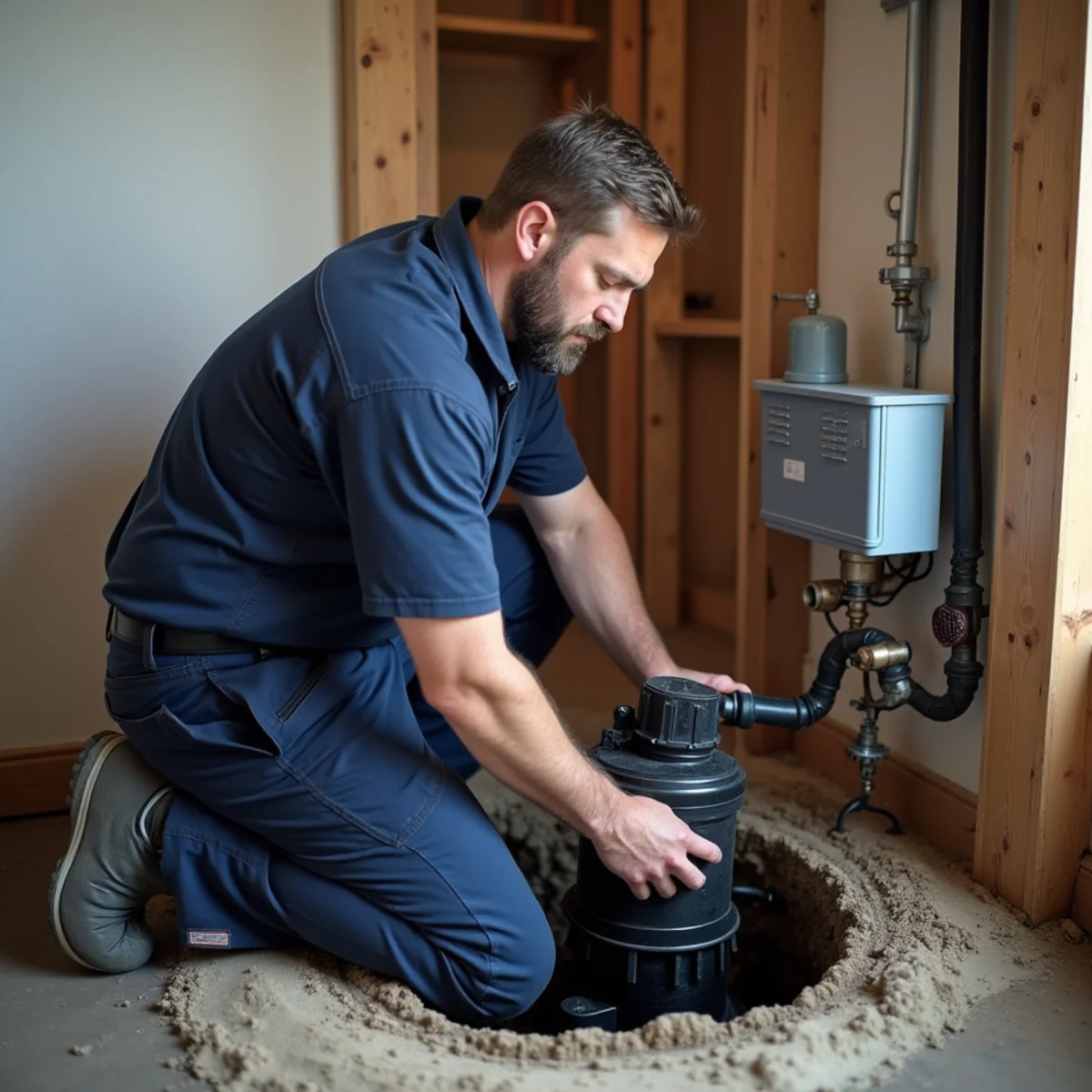
Standing Water in Your Yard: What to Check Before You Call Anyone
A surprising share of standing-water calls turn out to be roof water, which is the cheapest thing on the list to fix. Here is how to find out which problem you have before anyone quotes you a trench.
Read the guide →
Sump Pump Buying Guide for Fredericksburg Basements
The appliance that only matters on three days a year. Here is how to pick one, install it properly, and make sure it actually runs when the storm arrives.
Read the guide →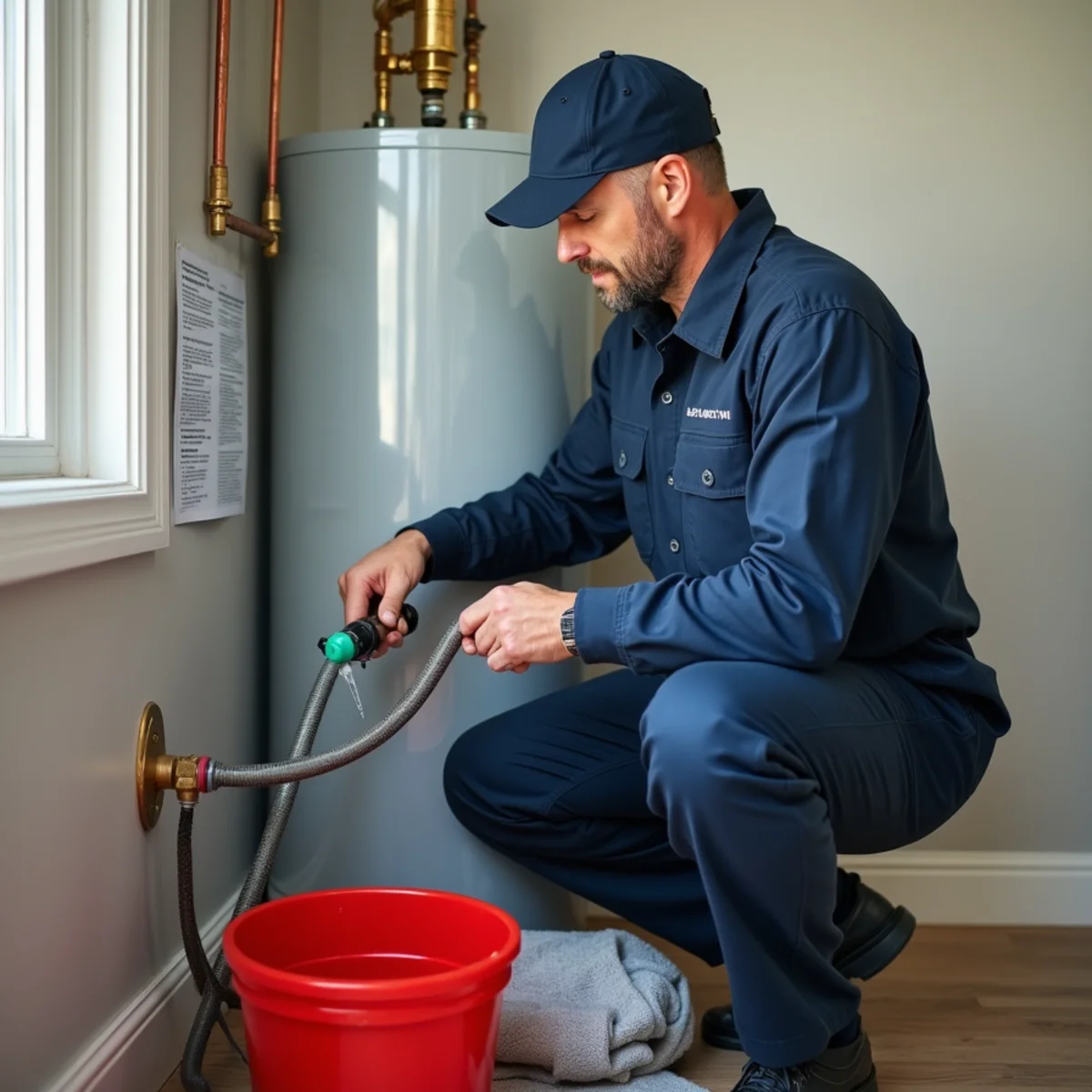
The Annual Plumbing Maintenance Checklist for Virginia Homeowners
Nearly every emergency we run was preventable. Here is the season-by-season list — most of it free, most of it under ten minutes an item.
Read the guide →