The short answer
A standard home inspection stops at the foundation wall and does not include the sewer lateral — the buried pipe you own outright once you close. A camera scope takes under an hour, costs a fraction of a lateral repair, and finds root intrusion, collapsed clay and Orangeburg before you're liable for them.
A standard home inspection is genuinely valuable, and it stops at the foundation wall. The sewer lateral — the pipe carrying everything from your house to the city main or the septic tank — is not part of it.
That pipe is buried, it is entirely the property owner's responsibility, and replacing it is among the most expensive repairs a homeowner can face. It is also completely invisible on walkthrough day. A house with a collapsed lateral looks exactly like a house without one, right up until it does not.
What a sewer scope actually is
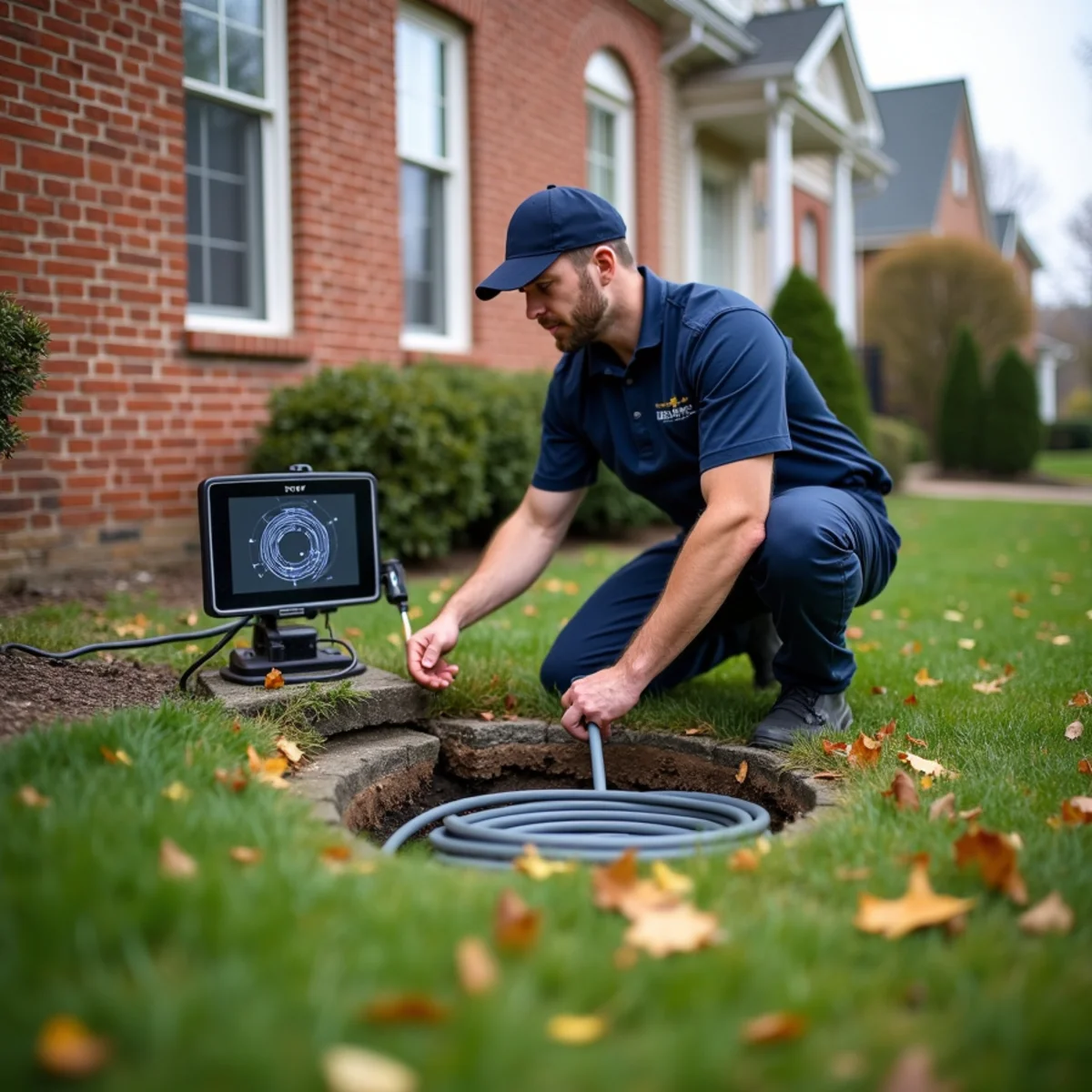
A plumber feeds a waterproof camera on a flexible push rod through a cleanout — usually an accessible cap outside the house or in the basement — and runs it the full length of the lateral to the connection point.
You watch the footage. A transmitting sonde in the camera head lets the plumber mark the exact location and depth of any defect on the surface above, which turns a vague concern into a specific, quotable repair.
It takes under an hour on most homes and costs a small fraction of what it protects against.
What it finds
Root intrusion
The most common finding in older neighborhoods. Roots grow toward the moisture leaking from an aging joint, then thicken inside the pipe where conditions are ideal. On camera they look like a mat or a curtain filling the pipe.
Around Fredericksburg this is especially common in areas with mature street trees — the Downtown historic district, College Heights, older parts of Falmouth. Beautiful canopy, expensive sewer laterals.
Collapsed or cracked pipe
Clay laterals crack and offset at joints as soil shifts. Cast iron corrodes from the bottom of the pipe where waste sits. Either can progress to a partial or full collapse, at which point the line is not repairable by cleaning.
Orangeburg pipe
A bituminous fiber pipe used in some post-war construction. It deforms into an oval and eventually collapses. If a camera finds Orangeburg, plan on replacement — it is not a maintenance situation, and lining generally is not viable.
Bellies
A low spot where the pipe settled below grade. Water stands in it permanently, solids drop out of suspension, and the section becomes a collection point. On camera the head has to swim through it. Small bellies can be managed; significant ones need excavation and re-bedding.
Improper connections and abandoned taps
Previous work done badly — a downspout illegally tied into the sanitary sewer, an abandoned line left open, a repair coupling that was never properly bedded. These matter both for function and, in some jurisdictions, for compliance.
Which homes need one
Our threshold is straightforward: any home older than about thirty years, and any home at any age with mature trees between the house and the street.
We would also camera before buying newer construction if there is any history of drain problems, because PVC laterals laid quickly during boom-era building sometimes settle into a belly within the first several years.
How to use the result
A sewer scope gives you three possible outcomes and all three are useful.
- The line is sound. You paid a small amount for genuine peace of mind, and you now know the baseline condition of a component you will own for years.
- There is a manageable issue — light root intrusion, a small belly. You have a specific, priced item you can raise in negotiation, or budget for deliberately.
- There is a serious defect. You now know before closing rather than after. That is either a price adjustment, a seller repair, or a decision not to proceed — and any of those is better than discovering it in month four.
Ask for the footage. A good plumber will give it to you, and having a recording means you can get a second opinion on any recommended repair without redoing the inspection.
Who is responsible for the lateral?
Generally the property owner, from the house to the connection at the main — though the exact boundary varies by jurisdiction. This surprises people, because the pipe is often under public right-of-way for its last stretch.
During an inspection we identify where your responsibility ends, so if there is a defect you know whether it is yours to fix or the utility's.
What it is not
A sewer scope shows the interior condition of the pipe. It does not test the supply piping, the water heater, the fixtures or the drain lines inside the house. Those are separate checks, and worth doing — particularly the supply piping material and the water heater's manufacture date, both of which take minutes to assess and both of which change your first-year budget.
It also cannot always see the full extent of a problem behind a blockage. If the camera hits a wall of roots, what is beyond them is unknown until the line is cleared. A good plumber will tell you that rather than guessing.
Schedule it during your contingency period
This only works if the results arrive while you still have leverage. Book it as soon as the inspection period starts, alongside your general home inspection, so you are not chasing a plumber's availability against a closing date.
Related services and areas
If this article describes what you're dealing with, these are the pages that cover the fix.
Frequently Asked Questions
No. Standard home inspections stop at the foundation wall and do not include the buried sewer lateral. It is a separate inspection, it is the property owner's responsibility once you close, and it is among the most expensive repairs a homeowner can inherit.
A small fraction of what a lateral repair costs — typically comparable to a routine service call. Given that it protects against a four- or five-figure surprise, it is one of the highest-return inspections available to a buyer of an older home.
Anything older than about thirty years, and any home at any age with mature trees between the house and the street. We would also scope newer construction if there is any history of drain problems, since PVC laterals laid during fast building sometimes settle into a belly.
You have a specific, located, quotable defect before closing rather than a surprise afterward — which becomes a price adjustment, a seller repair, or an informed decision not to proceed. Ask for the recorded footage so you can get a second opinion on any recommended repair.
Want it handled?
Talk to a Licensed Fredericksburg Plumber
Written, itemized estimate before we start. We'll also tell you honestly when the answer is that you don't need us yet.
- 4.8 stars · 26 reviews
- Licensed & insured
- 24/7 emergency service