The short answer
Before buying anything, check where the water is actually coming from — clogged gutters and downspouts discharging at the foundation cause a large share of basement water. Then size from the pump's performance curve at your real vertical lift, not the headline figure on the box, which is measured at zero lift.
A sump pump is the appliance that matters on maybe three days a year. The other 362 days it sits in a hole doing nothing — which is exactly why so many of them are quietly dead when the storm finally comes.
This guide covers what to buy, what makes the difference between a system that works and one that fails, and the thing to check before you buy anything at all.
Before you buy: where is the water coming from?
A meaningful share of basement water problems have causes above ground, and no pump fixes a drainage problem.
- Gutters full of leaves overflow and dump hundreds of gallons directly against the foundation during every rain.
- Downspouts that discharge within a few feet of the wall are effectively an irrigation system aimed at your basement. Extend them out and away.
- Grading that has settled toward the house over the decades. Soil compacts around a foundation, and eventually the yard drains inward.
- Window wells with no drainage that fill and overflow through the frame.
- A failed or crushed exterior footing drain — a bigger project, but at least an identifiable one.
Fix those first where they apply. A sump pump handles groundwater rising from below, and it should not be your primary defense against roof runoff.
Sizing: ignore the number on the box
The capacity printed on a sump pump box is measured at zero lift. Your pump is not operating at zero lift — it is pushing water eight or ten feet vertically and then some distance horizontally, and each of those costs flow.
A pump rated at 3,000 gallons per hour might deliver closer to 2,000 in a real basement installation. Size from the manufacturer's performance curve at your actual total head, not the headline figure.
Horsepower is not the whole story
One-third horsepower handles the majority of residential situations. One-half or three-quarters helps when lift is high or inflow is heavy.
But an oversized pump in a small pit short-cycles — starting and stopping constantly, which is what actually kills pump motors. Pit volume matters as much as pump size, and matching them is the real skill.
Submersible or pedestal?
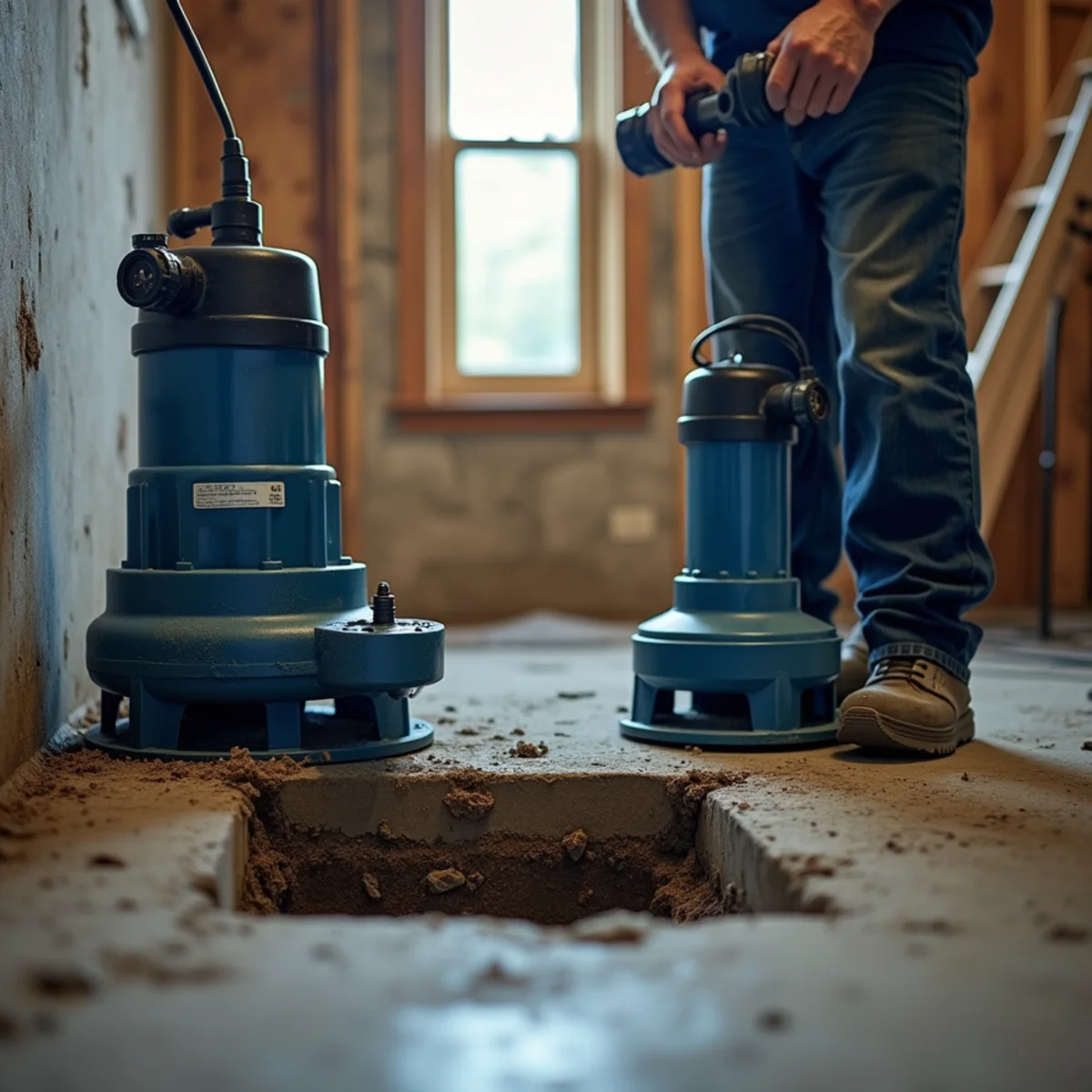
Submersible pumps sit in the water, run cooler and quieter, and generally last longer. Pedestal pumps have the motor above the pit, cost less, and are easier to service but are noisier and more exposed.
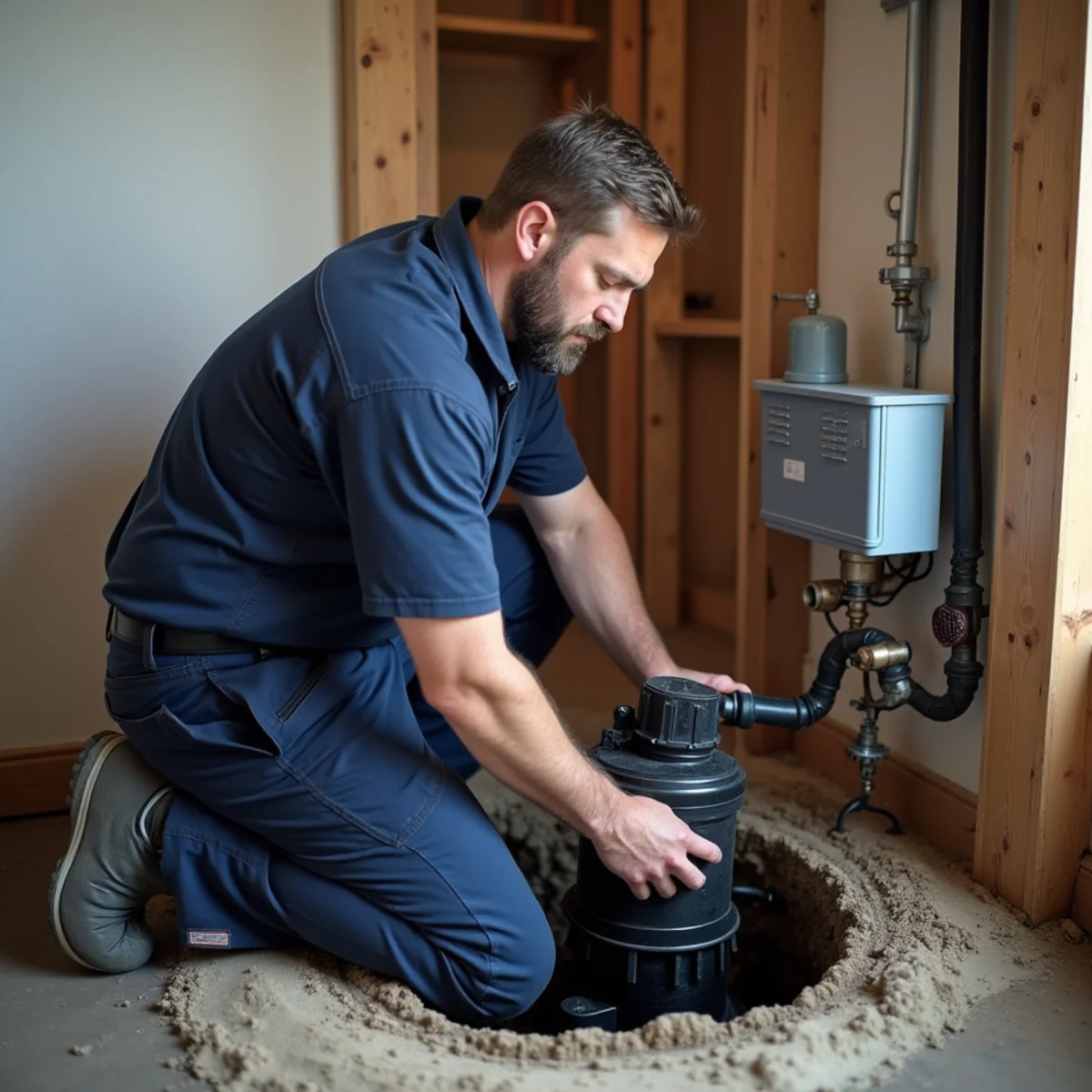
For most Fredericksburg basements, submersible is the better buy. Look for a cast iron body rather than plastic — cast iron dissipates heat into the surrounding water far better, which matters in a pump that runs hard during a storm.
The details that actually determine reliability
These are the things we check on every install and routinely find wrong on existing systems. The pump itself is rarely the weak point.
Check valve
Without one, the water sitting in the discharge pipe falls back into the pit every time the pump shuts off — so the pump immediately runs again to move the same water. This is the single most common cause of short-cycling and premature pump death.
Weep hole
A small hole drilled in the discharge pipe below the check valve prevents an air lock that can leave the pump spinning and pumping nothing at all. It is a two-minute detail that occasionally saves a basement.
Discharge routing
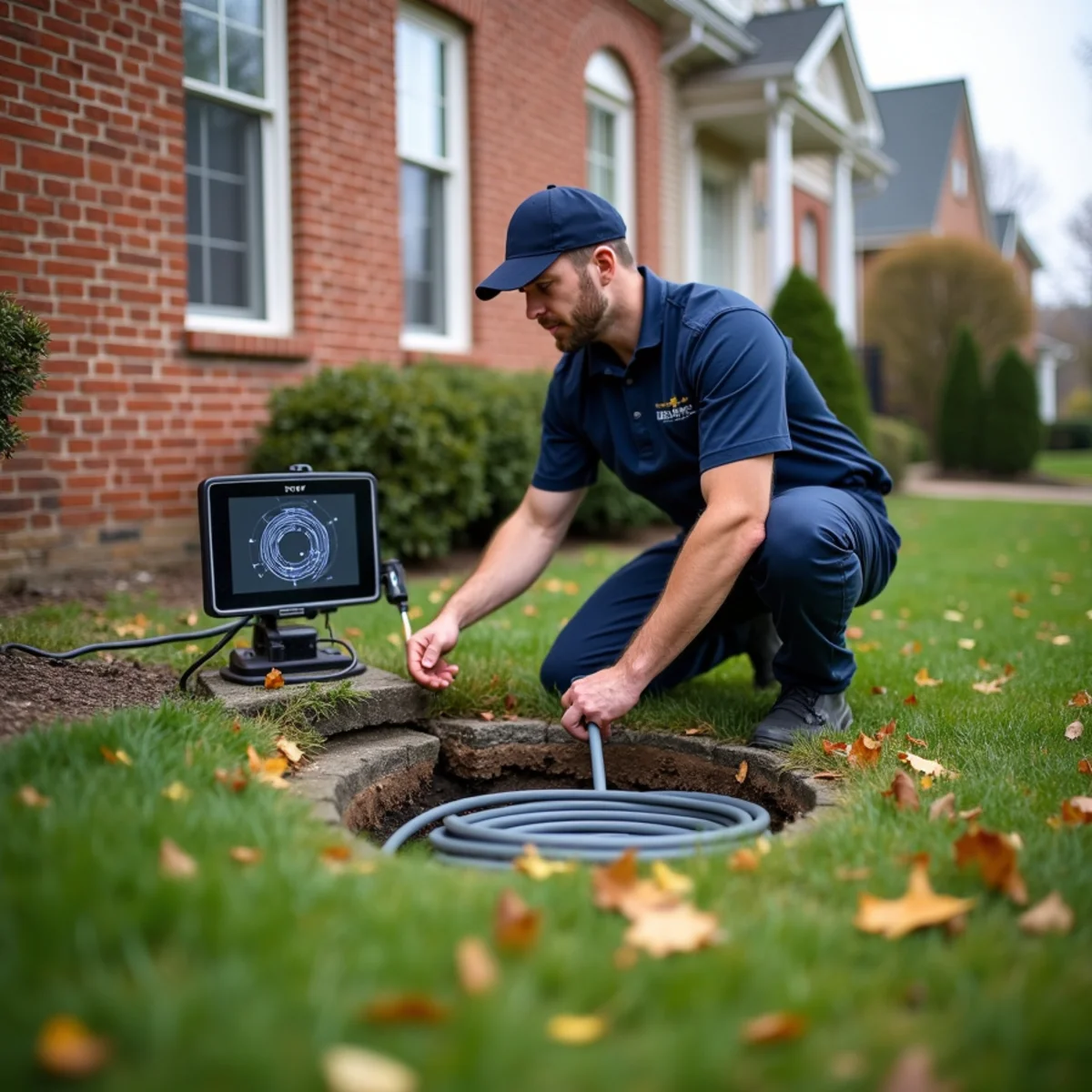
Water must exit at least ten feet from the foundation and downhill. A discharge that dumps at the corner of the house recirculates — the water soaks back into the ground, returns to the pit, and the pump runs constantly.
On compact lots this sometimes means a buried line to a pop-up emitter, which is real trenching work and worth doing.
Freeze protection at the exit
A discharge line that seals shut with ice in January turns a working pump into a dead one at exactly the wrong moment. The termination has to be designed so it cannot ice closed.
A proper lid and a dedicated circuit
A sealed lid with grommets for the pipe and cord keeps soil gas and humidity out of the basement and stops debris falling in. And the pump should be on its own GFCI-protected circuit — not shared with the chest freezer that will eventually trip it.
Battery backup: what it does and does not do
The storms that produce the most groundwater are the same storms that knock out power. A primary pump without a backup is protection that fails at the exact moment of maximum need — and in this region that is not hypothetical, it happens somewhere every year.
A battery backup system is a second, DC-powered pump with its own float, wired to a charger and a deep-cycle battery. When utility power drops or the primary fails, it takes over automatically. Runtime depends on inflow rate and battery capacity.
What it is not: a fix for a pump that is undersized for the inflow, or a substitute for maintaining the primary. It is insurance, and it needs testing along with everything else.
Test it twice a year — it takes two minutes
Pour five gallons of water into the pit slowly and watch. The float should rise, the pump should start, the water should drop, and the pump should shut off cleanly without cycling back on.
Do it before spring storm season and again before winter. If it hums without pumping, does not start, or starts and stops repeatedly, call before the next storm rather than during it.
While you are down there: check that the pit is free of debris, that the float can move without obstruction, and that the discharge line outside is clear and pointed away from the house.
When to replace
Sump pumps run seven to ten years, and less in a pit that works hard. They are consumable equipment, not permanent fixtures.
Replacing one proactively at year eight costs a fraction of replacing it after it fails mid-storm with water on the floor and a restoration contractor on the way. If your pump came with the house and the house is fifteen years old, it is on borrowed time regardless of how it sounds today.
Related services and areas
If this article describes what you're dealing with, these are the pages that cover the fix.
Frequently Asked Questions
It depends on your actual vertical lift and discharge run, not the number on the box — that figure is measured at zero lift. One-third horsepower handles most residential situations; higher horsepower helps with high lift or heavy inflow. Note that an oversized pump in a small pit short-cycles, which is what actually kills pump motors.
Most often a failing check valve, letting water in the discharge pipe fall back into the pit so the pump immediately moves the same water again. Other causes are a stuck float, a naturally high water table, or a discharge terminating too close to the foundation and recirculating.
If you have a finished basement or store anything you care about down there, yes. The storms that generate the most groundwater are the same storms that cause power outages, so a pump on utility power alone goes offline exactly when it matters. If the basement is bare concrete storage, it is a judgment call.
Pour five gallons of water into the pit slowly. The float should rise, the pump should start, water should drop, and it should shut off cleanly without cycling back on. Do it twice a year — before spring storms and before winter. Two minutes each time.
Want it handled?
Talk to a Licensed Fredericksburg Plumber
Written, itemized estimate before we start. We'll also tell you honestly when the answer is that you don't need us yet.
- 4.8 stars · 26 reviews
- Licensed & insured
- 24/7 emergency service