
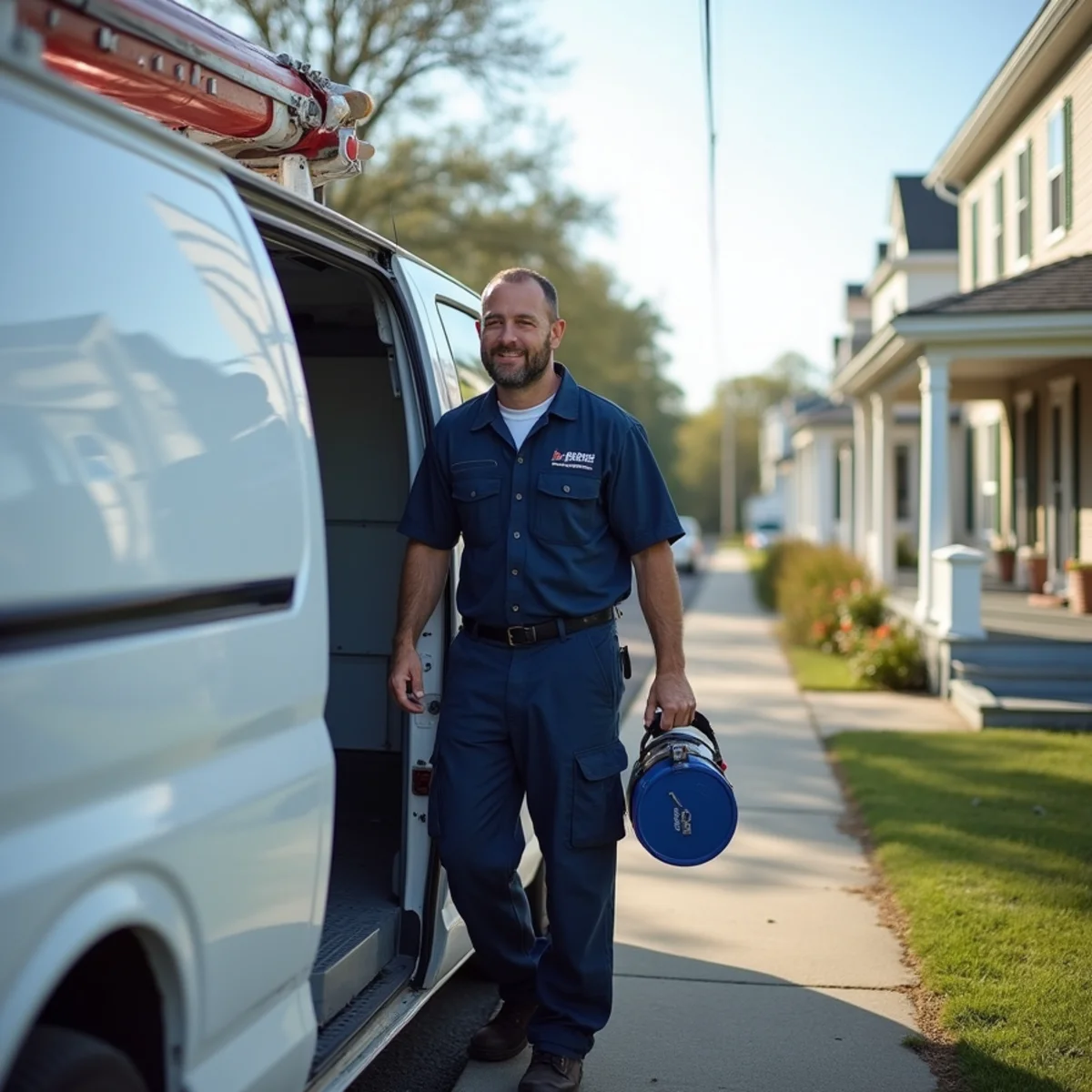
Yes — All Pro Plumbing is a licensed, insured plumber serving Colonial Beach, VA and all of Westmoreland County. Colonial Beach is a planned trip from our Fredericksburg shop, so we arrive stocked to finish in one visit. Homes here are on municipal supply, where hard water scaling water heaters and fixtures is the recurring theme. Gas work here is propane, which changes orifice sizing and leak behaviour. Permits go through Town of Colonial Beach, and you get a written itemised estimate before any work begins.
Colonial Beach is a Potomac riverfront town where a substantial share of the housing is seasonal, and that single fact drives most of the plumbing work we do there.
A house that is lived in tells you when something is wrong. Somebody hears water running, notices the pressure changed, sees a stain on a ceiling. An empty house tells you nothing until somebody opens the door — which can be six weeks after a supply line let go.
Winterize properly or pay for it in April
The single most preventable expensive failure we see in this town is a house that was closed for the season without being drained correctly. Here is what a proper winterization actually involves:
- Shut off the main and, where the property has one, the well pump breaker.
- Open every fixture — hot and cold, upstairs and down — and the lowest drain point, and let the system drain fully.
- Drain the water heater completely and cut its power or gas.
- Blow out lines with compressed air where the layout traps water in low spots that gravity will not clear.
- Pour non-toxic RV antifreeze into every trap, including floor drains, showers and the toilet bowls and tanks. This stops the traps freezing and cracking, and it keeps sewer gas from coming back up a dry trap.
- Disconnect and drain every hose bib, and shut off and drain any irrigation.
Skip any one of those and there is a real chance of arriving in spring to a cracked trap, a split line, or a water heater that froze and failed. We handle full winterization and spring reopening for owners who would rather not manage it, and it costs a fraction of a single freeze failure.
Automatic shutoff valves are worth it here
For any house that sits empty for stretches, a smart shutoff valve on the main is the best protection available. These devices monitor flow patterns, learn what normal use looks like, and close the main automatically when they see something abnormal — a line that has been running continuously for an hour, for instance.
For a second home, the math is not close. The cost of the device is a small fraction of what an unattended burst line does to a finished interior over a week.
Salt air, humidity and corrosion
Waterfront properties deal with a more corrosive environment than inland homes. Exterior fixtures, hose bibs, and any exposed metal take a beating. Water heaters in unconditioned spaces near the water frequently show external corrosion at fittings well before the tank itself has a problem.
The practical response is choosing materials that hold up — brass and stainless where it makes sense, and paying attention to dielectric separation between dissimilar metals so galvanic corrosion does not accelerate at every transition.
Older cottages and mixed piping
A lot of Colonial Beach housing started as modest seasonal cottages and was expanded and updated over decades. Opening a wall in one of these is genuinely an unknown — we have found original galvanized feeding copper feeding CPVC in a single run, with corrosion at every transition.
For a house at that stage, a partial or whole repipe is frequently the better spend than another year of chasing individual failures. We will give you the honest comparison, including the option of repiping only the problem branches rather than the whole system.
Elevated water tables and crawl spaces
Riverfront and near-river lots sit close to the water table, and crawl spaces here take on water readily. Standing water under a house is a humidity and wood-decay problem long before it is a structural one. A proper vapor barrier plus a pit and correctly sized pump handles most of it, and getting the discharge routed well away from the foundation matters as much as the pump itself.
Around Colonial Beach
If you're near any of these, you're well inside our service range.
- Potomac River waterfront
- Colonial Beach Boardwalk
- Monroe Bay
- Route 205
- Westmoreland County
What customers say
“Will be using this company for years to come! Honest, trustworthy, outstanding work!”
Why Colonial Beach residents choose All Pro Plumbing LLC
We're honest about the drive to Colonial Beach
Colonial Beach is a real distance from our shop. We tell you a realistic arrival window rather than an optimistic one, we come stocked to finish in one visit, and if somebody closer can reach you faster on an emergency we say so.
We know what Colonial Beach water does to equipment
Local mineral content is why water heaters here give eight or nine years against a rated twelve. We will tell you when the honest fix is treating the water rather than replacing the appliance again.
We understand water-table properties
Ground moisture is a permanent condition on Colonial Beach lots, not an occasional event. That changes sump discharge routing, crawl space treatment and material selection — and we plan for it rather than reacting.
Permits, licence and a written price
Licensed and insured in Virginia, permits pulled through Town of Colonial Beach on the work that needs them, and a written itemised estimate you approve before anything starts. 4.8 stars from 26 Google reviews.
Colonial Beach plumbing questions
Yes, and we handle spring reopening too. Full winterization means draining the system, draining the water heater, blowing out lines where the layout traps water, and putting non-toxic antifreeze in every trap. Skipping any step is how people arrive in April to a cracked trap or a split line.
A smart automatic shutoff valve on the main. It learns normal flow patterns and closes the water when it sees something abnormal — like a line running continuously for an hour. For a second home the math is not close: the device costs a fraction of what an unattended burst line does over a week.
The environment is more corrosive, and dissimilar metals in contact accelerate it further. Exterior fixtures, hose bibs and exposed fittings take the worst of it. Using appropriate materials and proper dielectric separation between dissimilar metals slows it considerably.
It is common in houses that were expanded over decades, and yes, it is worth addressing. Every transition between dissimilar metals is a corrosion point unless it was made with a proper dielectric union, and many older ones were not. A partial repipe of the problem branches is often the smart middle option.