
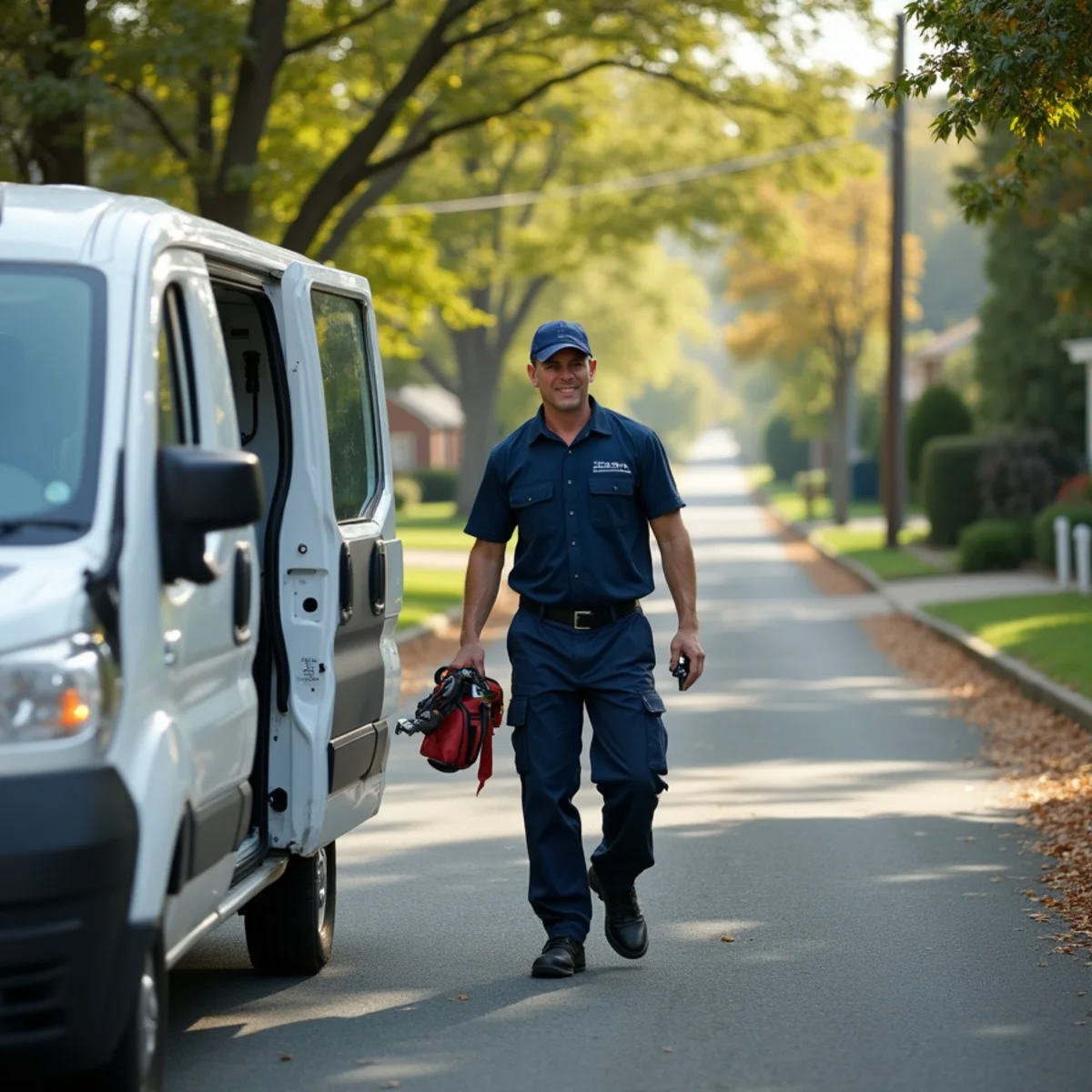
Yes — All Pro Plumbing is a licensed, insured plumber serving Ferry Farm, VA and all of Stafford County. Ferry Farm is minutes from our Potomac Avenue shop, so emergency response here is genuinely fast. Homes here are on municipal supply, where hard water scaling water heaters and fixtures is the recurring theme. Permits go through Stafford County, and you get a written itemised estimate before any work begins.
Ferry Farm is our neighborhood. Our shop is on Potomac Avenue in the 22405, which puts most of Ferry Farm inside a few minutes' drive. If you live here, you get the fastest response time we are capable of offering anyone.
That is not a marketing line — it is arithmetic, and it matters most at the moments you would least like to test it. When a supply line lets go on a Sunday morning, the difference between a plumber four minutes away and one dispatching from Northern Virginia is measured in square feet of flooring.
The housing here
Ferry Farm sits along the Route 3 corridor east of the Rappahannock, and its housing spans several decades. There is mid-century construction with copper supply and cast iron drains, later subdivision development from the 1980s and 1990s, and newer infill.
The mid-century homes are at the point where copper starts producing pinhole leaks and original cast iron waste stacks have scaled down enough to cause chronic slow drains. The 1980s and 1990s homes are on their second round of equipment — water heaters, sump pumps, fixture shutoffs. Newer construction mostly needs routine maintenance and attention to water quality.
River proximity and drainage
Being near the Rappahannock means some properties here sit closer to the water table than owners expect, and crawl spaces and basements take on water more readily than they would further inland.
Standing water in a crawl space is a humidity and wood-decay problem long before it becomes structural. Moisture rises through the floor system into the living space, drives up cooling costs in summer, and creates the conditions for mold and rot in framing that is genuinely expensive to replace.
As always, we check what is delivering the water before recommending equipment. Overflowing gutters and downspouts discharging near the foundation account for a very large share of crawl space and basement water calls. Where groundwater genuinely collects, a proper vapor barrier plus a pit and correctly sized pump handles most of it.
Winter, and the annual burst pipe wave
Every January we run a wave of frozen and burst pipe calls, and a large share of them are the same failure repeated across different houses.
Because deep freezes here are short and irregular, a lot of local plumbing was never protected the way it would be further north. Crawl space runs go uninsulated. Garage walls carry supply lines with siding as the only barrier. Standard hose bibs hold water right at the wall, and when a connected garden hose prevents that water from draining, the bib splits — frequently inside the wall, discovered in April when someone turns it on and water pours into the basement.
Three preventive steps before the first hard night: disconnect every hose, insulate exposed supply runs in crawl spaces and garages, and know where your main shutoff is and make sure every adult in the house can operate it. Those three prevent most of what we respond to.
What to do while we are on the way
Even at four minutes out, the first thing that happens is water. Shut the main off. If the leak is at the water heater, close the cold inlet valve on top of the tank and kill the gas or the breaker. Move anything valuable clear of the water's path.
And do not use a torch or a heat gun to thaw a frozen pipe. That is how a burst pipe becomes a house fire, and it happens more often than it should.
Around Ferry Farm
If you're near any of these, you're well inside our service range.
- George Washington's Ferry Farm
- Rappahannock River
- Route 3 / Kings Highway
- Chatham Manor
- Potomac Avenue
What customers say
“Both were very professional and informative. Problem was discovered and fixed. Area was clean when they finished.”
Why Ferry Farm residents choose All Pro Plumbing LLC
We're genuinely local to Ferry Farm
Our shop is on Potomac Avenue in Fredericksburg, not a dispatch centre in Northern Virginia. On an emergency call in Ferry Farm that difference is measured in square feet of flooring, not minutes.
We know what Ferry Farm water does to equipment
Local mineral content is why water heaters here give eight or nine years against a rated twelve. We will tell you when the honest fix is treating the water rather than replacing the appliance again.
Leaks located before anything is opened
Slab construction is common in Ferry Farm, and a leak under concrete gives you almost nothing to see. Acoustic location and thermal imaging mean one precise opening instead of exploratory demolition.
Permits, licence and a written price
Licensed and insured in Virginia, permits pulled through Stafford County on the work that needs them, and a written itemised estimate you approve before anything starts. 4.8 stars from 26 Google reviews.
Ferry Farm plumbing questions
Faster than anywhere else we serve — our shop is on Potomac Avenue in the same zip code. Most Ferry Farm addresses are a few minutes out, which matters most on emergency calls where minutes translate directly into damage.
Because deep freezes are short and irregular, a lot of local plumbing was never protected the way northern plumbing is. Crawl space runs go uninsulated, garage walls carry supply lines with minimal barrier, and standard hose bibs hold water at the wall. A single hard night finds all of it.
Classic freeze split. A standard hose bib holds water right at the wall, and a connected garden hose prevents it from draining — so the trapped water freezes, expands and splits the pipe inside the wall. You discover it in spring when you turn it on. Converting to a frost-free sillcock removes the failure mode entirely.
Sometimes, but check gutters and grading first — roof runoff delivered to the foundation is the most common source. Where groundwater genuinely collects, a vapor barrier plus a pit and correctly sized pump is the fix. Either way it is worth addressing before it becomes a wood-decay problem.