Yes — All Pro Plumbing is a licensed, insured plumber serving Ruther Glen, VA and all of Caroline County. Ruther Glen is a planned trip from our Fredericksburg shop, so we arrive stocked to finish in one visit. Homes here run on private wells and septic, so pumps, pressure tanks and water treatment are routine work for us. Gas work here is propane, which changes orifice sizing and leak behaviour. Permits go through Caroline County, and you get a written itemised estimate before any work begins.
Ruther Glen covers a broad rural stretch of southern Caroline County, and the properties here are spread out. Most homes draw from private wells, discharge to septic, and sit far enough from a hardware store that a plumber showing up without the right part is a genuine problem.
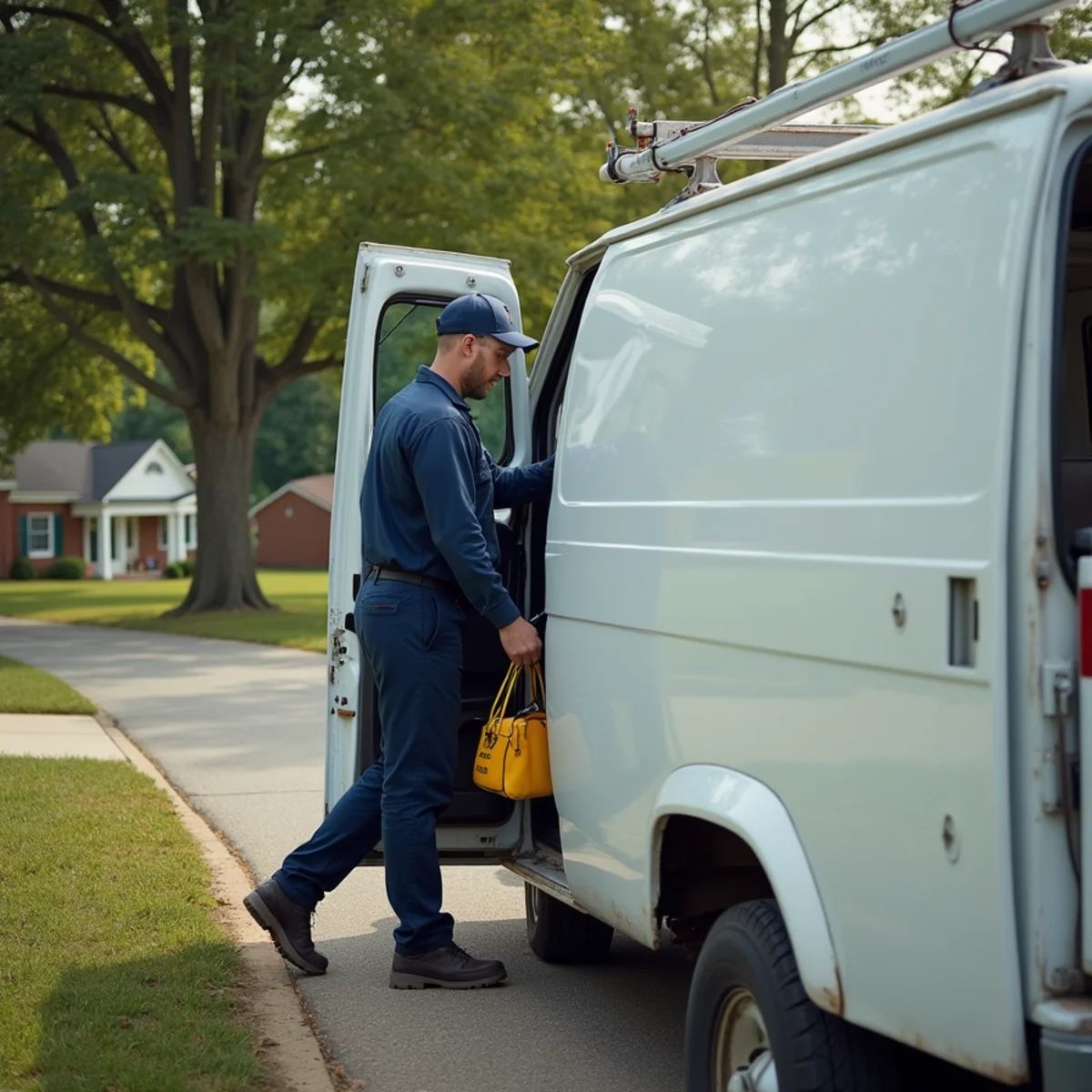
So we come stocked. Pressure switches, tank tees and fittings, pump control components, treatment cartridges, common valves and supply lines ride on the truck. We would rather carry inventory we do not use than cost you a second day.
Well systems are the core of the work here
A residential well system has four parts, and knowing them makes the symptoms interpretable: the pump (usually submersible, hanging on a drop pipe below the water level), the pressure tank (holding a cushion of compressed air over stored water), the pressure switch (starting and stopping the pump at set pressures), and a check valve (keeping water from draining back down the well).
Match the symptom to the part:
- Pressure surging while a tap runs, pump cycling every few seconds — waterlogged pressure tank. The most common finding by a wide margin.
- No water at all — check the breaker first, then the pressure switch contacts, then the pump.
- Pump runs and never shuts off — a leak in the system, a pump losing capacity, a dropping water level, or a failed switch.
- Air sputtering from faucets — low water level, a leak in the drop pipe, or a failed check valve letting the column drain back.
- Sudden sediment or cloudiness — the pump may be drawing near the bottom of the well, or a well screen is failing.
We work through the inexpensive checks before the expensive ones. Pulling several hundred feet of drop pipe to find out what is wrong is not a diagnostic method — we confirm electrically first.
Water treatment: test, then decide
Groundwater in southern Caroline County commonly carries iron, which stains fixtures and laundry; hydrogen sulfide, producing a sulfur smell that is often stronger on the hot side; sediment that loads filter cartridges; and in some pockets, low pH that is aggressive toward copper piping.
Those need different equipment. A softener removes hardness and does nothing for iron in some forms. Carbon handles taste and odor but not pH. Sediment filters are mechanical strainers and address none of the chemistry. Buying the wrong system is a common and expensive mistake out here, and it happens because somebody sold equipment before anybody tested water.
We test first. And if the answer is a forty-dollar filter cartridge rather than a system, we will tell you that.
Regardless of equipment: test annually for total coliform bacteria and nitrates. That is the baseline on any private well and it is entirely the homeowner's responsibility.
Propane and gas appliances
Homes out here are typically on propane rather than natural gas, and there are real differences. Propane is heavier than air, so a leak pools low rather than dispersing upward. It operates at different pressures with a regulator at the tank. And appliance orifices are sized differently — converting an appliance between natural gas and propane requires the correct conversion kit, not just a new connection.
Gas work is licensed, permitted and inspected, and we do not cut corners on it. If you smell gas, leave the house, call your propane supplier from outside, and call us after the line has been made safe.
Winter on a rural property
Rural homes have more exposed plumbing: crawl space runs, well houses, lines to barns and shops, and hydrants at distance. Before the first hard freeze, disconnect all hoses, insulate exposed runs, and verify that any well house has functioning heat. Those three things prevent the majority of the winter emergency calls we take from properties like these.
Around Ruther Glen
If you're near any of these, you're well inside our service range.
- I-95 Exit 104
- Route 1 / Jefferson Davis Highway
- Southern Caroline County
- North Anna River
What customers say
“Arrived early. Wonderful guys. Installed the equipment very quickly. Very friendly and arrived professionally dressed.”
Why Ruther Glen residents choose All Pro Plumbing LLC
We're honest about the drive to Ruther Glen
Ruther Glen is a real distance from our shop. We tell you a realistic arrival window rather than an optimistic one, we come stocked to finish in one visit, and if somebody closer can reach you faster on an emergency we say so.
We actually know well systems
A plumber who only works on municipal supply will condemn a good pump because they never checked the pressure tank. In Ruther Glen we work the diagnostic order — breaker, switch, tank charge, sediment filter — before anything expensive gets discussed.
We match the fix to the house
Ruther Glen covers more than one era of building, and the right repair in a 1950s house is frequently the wrong one two streets away. We diagnose before we quote.
Permits, licence and a written price
Licensed and insured in Virginia, permits pulled through Caroline County on the work that needs them, and a written itemised estimate you approve before anything starts. 4.8 stars from 26 Google reviews.
Ruther Glen plumbing questions
Yes. It is a drive, so we stock the truck for the likely job — pressure switches, tank fittings, pump controls, treatment cartridges and common repair parts — to finish on the first visit rather than requiring a second trip.
That points at the water heater rather than the well. The magnesium anode rod in a standard tank can react with sulfur-bearing water and produce hydrogen sulfide. Swapping to an aluminum-zinc anode frequently resolves it. If the smell is on both hot and cold, it is in the source water and needs treatment at the entry point.
Whatever your test says, and nothing more. Hardness needs a softener, iron needs the right media filter, taste and odor need carbon, low pH needs a neutralizer, and sediment needs a mechanical filter ahead of all of it. They are not interchangeable, and buying equipment before testing is the most common expensive mistake we see on wells.
Yes — propane line installation, repair and pressure testing, and appliance connections. Propane behaves differently from natural gas: it is heavier than air, runs at different pressures, and appliances need the correct conversion kit to switch between fuels. It is licensed, permitted and inspected work and we treat it that way.