
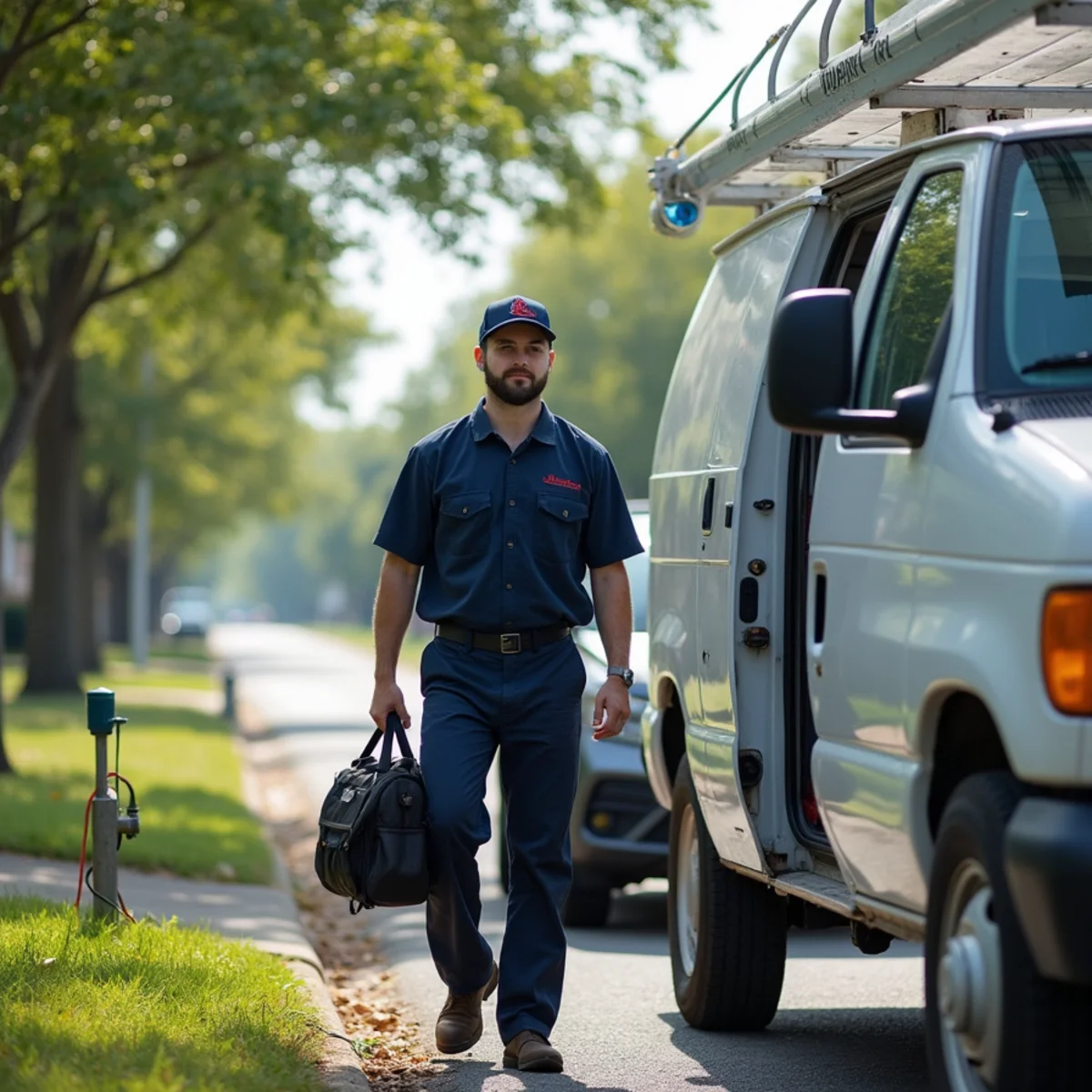
Yes — All Pro Plumbing is a licensed, insured plumber serving Widewater, VA and all of Stafford County. Widewater is a planned trip from our Fredericksburg shop, so we arrive stocked to finish in one visit. Homes here run on private wells and septic, so pumps, pressure tanks and water treatment are routine work for us. Gas work here is propane, which changes orifice sizing and leak behaviour. Permits go through Stafford County, and you get a written itemised estimate before any work begins.
Widewater occupies the peninsula between Aquia Creek and the Potomac in eastern Stafford County. It is a genuinely beautiful place to live, and being surrounded by water on three sides has specific consequences for the plumbing in your house.
The water table is your main variable
Lots here sit close to the water table, and that changes what happens below your floor. Crawl spaces take on water readily, basements where they exist need active management, and ground moisture is a permanent condition rather than an occasional event.
Standing water in a crawl space is a humidity and wood-decay problem long before it is a structural one. Moisture rises through the floor system into the living space, drives up cooling costs in summer, and creates the conditions for mold and wood rot in framing that is expensive to replace.
The fix is usually a combination rather than one thing: correct exterior drainage first, then a properly installed vapor barrier across the ground, then a pit and correctly sized pump where water actually collects, and in some cases a dedicated dehumidifier with encapsulation.
We assess before recommending all of that, because most crawl spaces do not need the full package. A remarkable number of crawl space water problems turn out to be roof runoff delivered by a clogged gutter or a downspout that stops two feet from the foundation.
Discharge routing on a small lot
One detail that comes up constantly on peninsula lots: where does the sump discharge go? Water needs to exit at least ten feet from the foundation and downhill, and on a compact waterfront lot that is not always obvious.
A discharge that dumps at the corner of the house is simply recirculating — the water soaks back into the ground and returns to the pit, so the pump runs constantly and wears out early. Getting the termination right sometimes means a buried line to a pop-up emitter, which is real trenching work and it is worth doing.
Freeze protection at the exit matters too. A discharge line that seals shut with ice in January turns a working pump into a dead one at exactly the wrong time.
Corrosion in a waterfront environment
The environment out here is harder on metal than inland conditions. Exterior fixtures, hose bibs and exposed fittings take a beating, and water heaters in unconditioned spaces frequently show corrosion at fittings well before the tank itself is a problem.
The practical responses are choosing materials that hold up, and paying attention to dielectric separation between dissimilar metals so galvanic corrosion does not accelerate at every transition. It is not exotic work — it is just attention to a detail that gets skipped in a hurry.
Wells and water quality
Many Widewater properties are on private wells. The service set is the standard one — pumps, pressure tanks, pressure switches, control wiring — plus treatment for whatever the water actually contains.
Test annually for bacteria and nitrates at minimum. Beyond that, this area's groundwater commonly shows iron, sediment and in places hydrogen sulfide. We test before recommending equipment, because matching treatment to the actual result is the entire job.
Part-time properties
Some homes here are second homes or seasonal, and an empty house is where the worst water damage happens. A supply line lets go on a Tuesday and runs until somebody arrives — potentially weeks later.
A smart automatic shutoff valve on the main is the best protection available for any property that sits empty. It monitors flow patterns and closes the water when it sees something abnormal. For a second home the math is not close.
Around Widewater
If you're near any of these, you're well inside our service range.
- Potomac River
- Widewater State Park
- Aquia Creek
- Eastern Stafford County
What customers say
“Fantastic service and I highly recommend them!”
Why Widewater residents choose All Pro Plumbing LLC
We're honest about the drive to Widewater
Widewater is a real distance from our shop. We tell you a realistic arrival window rather than an optimistic one, we come stocked to finish in one visit, and if somebody closer can reach you faster on an emergency we say so.
We actually know well systems
A plumber who only works on municipal supply will condemn a good pump because they never checked the pressure tank. In Widewater we work the diagnostic order — breaker, switch, tank charge, sediment filter — before anything expensive gets discussed.
We understand water-table properties
Ground moisture is a permanent condition on Widewater lots, not an occasional event. That changes sump discharge routing, crawl space treatment and material selection — and we plan for it rather than reacting.
Permits, licence and a written price
Licensed and insured in Virginia, permits pulled through Stafford County on the work that needs them, and a written itemised estimate you approve before anything starts. 4.8 stars from 26 Google reviews.
Widewater plumbing questions
Usually a combination, in this order: correct the exterior drainage and grading first, install a proper vapor barrier across the ground, then add a pit and correctly sized pump where water genuinely collects. Encapsulation with a dehumidifier is worth considering in persistent cases. Most crawl spaces do not need the whole package — we assess before recommending it.
At least ten feet from the foundation and downhill. A discharge that dumps at the corner of the house recirculates — the water soaks back in and returns to the pit, so the pump runs constantly and fails early. On compact lots that frequently means a buried line to a pop-up emitter, and it is worth the trenching.
The waterfront environment is harder on metal, and dissimilar metals in contact accelerate it further. Using appropriate materials and proper dielectric separation at every transition slows it considerably. Exterior fixtures and hose bibs take the worst of it and should be inspected annually.
A smart automatic shutoff valve on the main. It learns your normal flow patterns and closes the water when it detects something abnormal — like a line running continuously. In an empty house a burst line runs until somebody arrives, so the device pays for itself the first time it acts.